Saturday, June 11, 2022

October 17-30, 1969 Family Dog on The Great Highway, 660 Great Highway, San Francisco, CA: various bookings [FDGH '69 XXIV]


The Family Dog on The Great Highway, at 660 Great Highway, ca. 1969

The Family Dog on The Great Highway, 660 Great Highway, San Francisco, CA
The Family Dog was a foundation stone in the rise of San Francisco rock, and it was in operation in various forms from Fall 1965 through the Summer of 1970. For sound historical reasons, most of the focus on the Family Dog has been on the original 4-person collective who organized the first San Francisco Dance Concerts in late 1965, and on their successor Chet Helms. Helms took over the Family Dog in early 1966, and after a brief partnership with Bill Graham at the Fillmore, promoted memorable concerts at the Avalon Ballroom from Spring 1966 through December 1968. The posters, music and foggy memories of the Avalon are what made the Family Dog a legendary 60s rock icon.

In the Summer of 1969, however, with San Francisco as one of the fulcrums of the rock music explosion, Chet Helms opened another venue. The Family Dog on The Great Highway, at 660 Great Highway, on the Western edge of San Francisco, was only open for 14 months and was not a success. Yet numerous interesting bands played there, and remarkable events took place, and they are only documented in a scattered form. This series of posts will undertake a systematic review of every musical event at the Family Dog on The Great Highway. In general, each post will represent a week of musical events at the venue, although that may vary slightly depending on the bookings.

If anyone has memories, reflections, insights, corrections or flashbacks about shows at the Family Dog on the Great Highway, please post them in the Comments.

660 Great Highway in San Francisco in 1967, when it was the ModelCar Raceway, a slot car track

The Edgewater Ballroom, 660 Great Highway, San Francisco, CA

As early as 1913, there were rides and concessions at Ocean Beach in San Francisco, near the Richmond District. By 1926, they had been consolidated as Playland-At-The-Beach. The Ocean Beach area included attractions such as the Sutro Baths and the Cliff House. The San Francisco Zoo was just south of Playland, having opened in the 1930s. One of the attractions at Playland was a restaurant called Topsy's Roost. The restaurant had closed in 1930, and the room became the Edgewater Ballroom. The Ballroom eventually closed, and Playland went into decline when its owner died in 1958. By the 1960s, the former Edgewater was a slot car raceway. In early 1969, Chet Helms took over the lease of the old Edgewater.
One of the only photos of the interior of the Family Dog on The Great Highway (from a Stephen Gaskin "Monday Night Class" ca. October 1969)

The Family Dog On The Great Highway

The Great Highway was a four-lane road that ran along the Western edge of San Francisco, right next to Ocean Beach. Downtown San Francisco faced the Bay, but beyond Golden Gate Park was the Pacific Ocean. The aptly named Ocean Beach is dramatic and beautiful, but it is mostly windy and foggy. Much of the West Coast of San Francisco is not even a beach, but rocky cliffs. There are no roads in San Francisco West of the Great Highway, so "660 Great Highway" was ample for directions (for reference, it is near the intersection of Balboa Street and 48th Avenue). The tag-line "Edge Of The Western World" was not an exaggeration, at least in American terms.

The Family Dog on The Great Highway was smaller than the Bill Graham's old Fillmore Auditorium. It could hold up to 1500, but the official capacity was probably closer to 1000. Unlike the comparatively centrally located Fillmore West, the FDGH was far from downtown, far from the Peninsula suburbs, and not particularly easy to get to from the freeway. For East Bay or Marin residents, the Great Highway was a formidable trip. The little ballroom was very appealing, but if you didn't live way out in the Avenues, you had to drive. As a result, FDGH didn't get a huge number of casual drop-ins, and that didn't help its fortunes. Most of the locals referred to the venue as "Playland."


The Family Dog ad from the October 16, 1969 edition of San Francisco Good Times

October 17-30, 1969 Family Dog on The Great Highway, 660 Great Highway, San Francisco, CA
In late October 1969, the Family Dog on The Great Highway was not in a good way. Of all the old Avalon Ballroom stalwarts who had played the Dog, only the Grateful Dead seemed able to draw a profitable crowd. The other bands had largely given up playing there. The venue functioned more like a community center. Local bands played, or acoustic acts. The weekend "headliners" tended to be acoustic groups that had a lower overhead, since they had less equipment and could afford the risk of getting little return for their efforts. Throughout the balance of October 1969, the acts playing the Family Dog did not draw a crowd beyond some local hippies, and in retrospect were only of interest to the sort of blog that traffics in the the rabbit holes of San Francisco psychedelia (like this one).


A photo from the Floating Lotus Magic Opera show "Bliss Apocalypse" ca 1969

October 17-19, 1969 Family Dog at The Great Highway, San Francisco, CA: Malachi/Floating Lotus Opera Company/Golden Toad (Friday-Sunday) Saturday (October 18) only plus Alan Watts
The weekend booking included two legendary Berkeley outfits, ensembles that can't be imagined outside of late 60s Berkeley, both of whom disappeared almost without a trace save for me. Floating Lotus Magic Opera Company and The Golden Toad have no known audio recordings (save for some fragments), no video and only the thinnest of descriptions of their unique presentations. So time travel back to this weekend would be illuminating and unique, but Time Sheath technology is not widely available enough for this yet. Malachi--he's pretty interesting too. These shows were probably thinly attended. More's the pity


A Floating Lotus Magic Opera flyer from Berkeley ca April 27, 1968

The Floating Lotus Magic Opera Company is one of those only-in-Berkeley stories, all but unbelievable to to people who never lived in Berkeley, yet hardly even a standard deviation for those who have. Berkeley was some place in the late 60s: demonstrations on campus, riots on Telegraph Avenue, psychedelic rock bands for free in Provo Park or at night at the New Orleans House, blues at Mandrake's, Serious Folk at the Freight And Salvage. Oh yeah--and every Saturday, at John Hinkel Park, at 41 Somerset Place, near Arlington Circle, The Floating Lotus Magic Opera Company performing a really-hard-to-explain theater show with ritual chanting, costumes and music.

Though we have no video (that I know of), unlike some lost events, there are plenty of descriptions of the Floating Lotus Magic Opera Company, from inside and from the outside. There's a script of one of the "Operas" (called Walls Of Blood). Around late '68, Floating Lotus even got a good write-up in Rolling Stone magazine. 

At least here in late 1969, the Opera also performed at the Family Dog on The Great Highway, so they were definitely associating themselves with the hippie rock scene, even if the Opera itself had nothing musically to do with rock. At the very end in early 1970, they switched to the larger Live Oak Park, further down the hill and closer to campus, at 1301 Shattuck (between Shattuck Avenue and Oxford Street).

I do know that the Floating Lotus Opera Company was not without resonance. Among other things, there were numerous people involved, and costumes and stage sets. I know that around 1970, many of the sets and costumes made their way over to San Francisco and became part of The Cockettes stage show. Now, even I know that the Cockettes were important, but I'm not knowledgeable enough to say how, really, much less whether the Floating Lotus was influential or just a source of stage gear. In any case, the Floating Lotus appearances at the Family Dog were among their few indoor appearances, and may have been their only San Francisco presentations. It's also possible that so many people were involved with Floating Lotus that a certain number of West Bay friends and family showed up at the Dog just to see it, similar to--dare I compare it--a High School musical.

Bob Thomas iconic Grateful Dead logo, originally designed as a stencil so that Owsley Stanley could distinguish the Dead's equipment backstage from that of other bands

Robert Thomas was an old friend of Owsley Stanley. Besides being one of Owsley's housemates at his mountaintop aerie on Ascot Drive in Oakland (above Highway 13 and Park Boulevard), he played a number of other parts in Grateful Dead history. Most famously, it was Thomas who devised the "Skull-and-Lightning-Bolt" logo for the Dead, originally designed as a stencil so that Owsley and the crew could distinguish the band's equipment from others backstage at a rock festival. Thomas also did the cover art for Live/Dead.

Bob Thomas was an accomplished piper, playing a variety of traditional and largely obscure pipes from Europe.  As a result, Thomas put together a small band of players who performed at the Los Angeles and Marin Renaissance Fairs in the 1960s. They apparently played 15th to 18th century Mediteranean tunes on replicas of older instruments, including pipes and various stringed instruments. It couldn't be called authentic--it's not like there were tapes--but it represented a sincere effort to provide a whiff to fairgoers as to what European music from a few hundred years earlier might have sounded like. Thomas's 'Fair Band' varied in size and instrumentation, depending on who was available, but they were apparently the house band for the original Marin County Renaissance Pleasure Faires.

Bob Thomas playing one of his pipes

The Golden Toad

The original Golden Toad was an outgrowth of the Faire band. Originally a quartet, the group played a few local dates in mostly atypical venues. The Faire was only open at certain times, such as several weekends in the Summer, so the Golden Toad provided Thomas and his bandmates a chance to continue playing their music outside of the confines of the Faires. The earliest record I can find of a public performance by The Golden Toad outside of the Renaissance Fair was the 35th Annual Berkeley Old-Time Fiddlers Convention on June 8, 1968, in Provo Park (really the first time it was held, but it's a long story). The Toad also played a few times at the Freight And Salvage, Berkeley's traditional folk club.

The Golden Toad had begun as a quartet, but they added and subtracted members as time went on. Reputedly, they were known to have performed with up to 23 members, although how often they did that remains unknown. They also had some association with the Floating Lotus Opera. Some of the better known members of the Golden Toad included fiddler Will Spires and Deborah and Ernie Fischbach. Those with too many albums will recall that the Fischbachs had recorded a legendarily obscure album in 1967 called A Cid Symphony. Most or all of the members of The Golden Toad played other kinds of music in various ensembles, so the band was inherently part time, but perhaps by virtue of being a labor of love the Golden Toad seemed to have no need to make concessions to anything resembling conventional business practices.

The Golden Toad and Floating Lotus Magic Opera regularly appeared together in Berkeley. There was a particularly legendary event, or series of events, in which the ensembles appeared early on a Sunday morning, and baked bread. The bread was consumed after the performances. Although the full membership of both the Toad and the Lotus is unknown, it's likely they shared a lot of players. It may also be that the sheer volume of performers helped improve the gate.


Malachi (born John Morgan Newbern, in Baltimore), was a Buddhist guitarist. He had put out the album Holy Music on Verve in 1966. Malachi (1944-2020) lived in Santa Rosa, and had a full life as a musician and luthier.

English-born Alan Watts (1915-73) was a well-known popularizer of Zen teachings, and was well-known from KPFA radio in Berkeley and numerous books. Watts had appeared at the "Holy Man Jam" a few weeks earlier. These kinds of lectures were popular at the Family Dog, but the audiences they drew didn't seem to translate to increased gates for the rock and roll shows.

October 20, 1969 Family Dog on the Great Highway, San Francisco, CA: Monday Night Class with Stephen Gaskin
Stephen Gaskin was a popular literature instructor at San Francisco State, whose campus was not too far down the road (at 19th Avenue and Holloway). Gaskin spoke about what we would now be called "Human Consciousness" or "Self-Help," but at the time he was called a "Hip Guru." I am no expert in this area, but I will say that Gaskin was neither a con artist nor interested in turning a profit, rare for those sort. His "Monday Night" class had been running since at least July. I don't know think it was every Monday night but just some, and it was the most popular regular booking at the Dog, save perhaps for the Grateful Dead (the picture at the top of the post is from one of his Monday night events). Admission was free, and Gaskin just lectured, although I think they took donations.

October 21, 1969 Family Dog on the Great Highway, San Francisco, CA: A Night of Guitar and Dance, Classical Flamenco, Folk and Rock (Tuesday)
I have no clue about this night's event. 

October 22, 1969 Family Dog on the Great Highway, San Francisco, CA New Riders of the Purple Sage/Lazarus  (Wednesday) Ecological Ball
In the midst of a couple of weeks of desultory bookings, and weeknights with some unknown locals, a genuine rock star was playing on Wednesday night. True, the Grateful Dead were not the juggernaut they would become a few decades later, but even in 1969 San Francisco Jerry Garcia was a rock star if anyone was. His picture had been in the Chronicle and Examiner since 1966, he was regularly quoted and the Dead were far more famous or infamous than their poorly-selling albums might suggest. The New Riders of The Purple Sage had played around enough that the local hippies knew Garcia was in the band.

Of course we have no idea how may people this show drew. But note that it is the only weeknight event with a light show and a named opening act (the Berkeley band Lazarus, featuring the Barsotti brothers). So Chet and Jerry must have figured they would draw enough to pay out a little bit. Since the New Riders had played a Tuesday or Wednesday almost every week that Garcia had been in town, the gigs must have made some financial sense. At this time, there were almost no nightclubs in the Bay Area playing original rock music, so there would have been no competition for the bookings, and any profitable return would have been more than the Riders would have made rehearsing at home. Whatever you think about the New Riders, particularly the early, sloppy New Riders: would you pay a buck to see Jerry Garcia? Sure, there's been inflation, but it was still just a dollar. A few quarters, some dimes and the odd nickel--seems worth it for Garcia, yeah?

As for the tag "Ecological Ball," I have no idea.

October 23, 1969 Family Dog on the Great Highway, San Francisco, CA: Acoustic Stringed Instrument Night (Thursday)
Pretty much this must have been like hoot night at any folk club, some local players without any following. Not necessarily bad, in fact, but was it worth a buck?


October 24-26, 1969 Family Dog on the Great Highway, San Francisco, CA Osceola/Barry McGuire & the Doctor/Shag/Clover [Sat only replaces Shag] (Friday-Sunday)
The headlining duo of Barry McGuire and Eric "The Doctor" Hord was probably pretty good in concert. But from the point of view of young hippies in the Sunset district, it wouldn't have been much of an attraction. McGuire, formerly a member of the New Christy Minstrels, had scored a huge hit in 1965 with "Eve Of Destruction." The song was written by producer PF Sloan, and it was almost a parody of a Bob Dylan folk-rock protest song (Sloan, a huge Dylan fan, would probably accept this characterization). McGuire, however, was marked as a one-hit wonder and a Dylan imitator. He had a few more records, but hadn't had a real hit since "Eve," so by 1969 any teenager would think he was trivial and over the hill.

The 1971 A&M Records album by Barry McGuire and The Doctor (Eric Hord)

Eric Hord had been the lead guitarist for The Mamas And The Papas. Hord was an excellent player, but his name wasn't known the way the singers were, and he wasn't a "guitar hero" like Mike Bloomfield or Jeff Beck. The Mamas And The Papas were seen as mid-60s AM pop, not at all hip in 1969. So to the extent that any fans knew who "The Doctor" was--itself not that likely--Hord's credentials didn't measure up to having been in the Butterfield Blues Band or the Yardbirds. So there wasn't much reason to come see the headliners. McGuire himself has admitted that he had serious drug problems in this era, so it can't have helped his live show. McGuire and Hord would go on to make an album in 1971 (Barry McGuire and The Doctor), backed by most of the Flying Burrito Brothers, but it would quickly disappear.

The opening acts were all regular performers at the Family Dog. Osceola, led by guitarist Bill Ande, had formed in San Francisco, but was made up of expatriate Florida musicians. I don't know anything about Shag, but I recognize their name from bookings. On Saturday night, Shag was replaced by the Mill Valley quartet Clover. They would be signed to Fantasy Records, and would release their first (of two) albums for the label in 1970. Lead guitarist John McFee would go on to play with Elvis Costello, The Doobie Brothers and Southern Pacific, among many others. 

October 27, 1969 Family Dog on the Great Highway, San Francisco, CA: Osceola/Occultist/Phoenix/Beefy Red (Monday) Cusp Party of Libra and Scorpio
I have no idea who promoted the "Cusp Party of Libra and Scorpio." Astrology wasn't really taken that seriously in the '60s, but you could ask someone what their sign was without being openly laughed at. A light show was booked (Heavy Water), so obviously some crowd was expected. I don't know anything about (the) Occultist, but they have a name befitting a light show. Since there were two stages at the Family Dog, booking two light shows was plausible.

As to the bands, Osceola returned, as they acted as sort of a "house band" at the Family Dog at this time. Phoenix was a San Francisco band with Acid Test roots and an extraordinarily complicated history, but their moment was passing. Beefy Red was a 10-piece Marin band with a horn section, somewhat on the model of the The Sons Of Champlin. Members included guitarist Barry Finnerty (later with the Crusaders), trumpeter Mark Isham (now a jazzman well known for film soundtracks) and drummer Jim Preston (later with the Sons).

Note that Stephen Gaskin was not presenting his Monday night class this week.

October 29, 1969 Family Dog on the Great Highway, San Francisco, CA Johnny Mars Blues Band/The Womb "American Indian Well Baby Clinic" [Celebration of the Mended Spirit] (Wednesday)
Wednesday's benefit for the American Indian Well Baby Clinic included Berkeley's Johnny Mars Blues Band and the appropriately named Womb (who were formerly called Birth--really).

The original trio of Dr. Humbead's New Tranquility String Band and Medicine Show, ca. 1968. (L-R) Jim Banford (guitar), Mac Benford (banjo), Sue Draheim (fiddle).

October 30, 1969 Family Dog on The Great Highway, San Francisco, CA: "Minstrel Night" Golden Toad/Dr. Humbead's New Tranquility String Band
(Thursday)
The Golden Toad returned Thursday night, and they would play throughout the weekend, including opening for the Grateful Dead on Saturday and Sunday (November 1-2). Since Toad leader Bob Thomas was an old friend of Owsley's, indeed Thomas was mostly resident in Owsley's Ascot Drive house in Oakland, the Golden Toad connections to the Grateful Dead were deep. 

Opening the show was Berkeley's Dr Humbead’s New Tranquility String Band. The Humbeads played old-timey music (pre-bluegrass, essentially) and featured fiddler Sue Draheim (1949-2013) banjoist Mac Benford (1940-2020) and guitarist Jim Bamford (1939-73). Oakland native Draheim had lived at 6018 Colby Street, a large home where many musicians who performed at Berekeley's Freight and Salvage had resided at one time or another. "Dr. Humbead" was their soundman, Earl Crabb. Shortly after the band began performing, another Colby Street resident, mandolinist Will Spires who also performed with The Golden Toad, joined the group. Spires was also a member of The Golden Toad (Spires would go on to become an important folklore scholar, but that was still in the future).

In their early 60s, folk music had been somewhat in apposition to rock music, which was seen as "kids music." After the Beatles changed the world, folk music became considerably less popular. Over in Berkeley, however, some hippies had started up the Freight And Salvage coffee house. While they were extraordinarily serious about all kinds of folk music--not just bluegrass, but Irish music, California Western (pre-country) and other indigenous forms--they weren't retro. The Freight denizens had long hair, smoked weed, were opposed to the Vietnam War and liked the Beatles. In many cases, the musicians playing folk music at the Freight had been or were currently in rock bands, so there was nothing forbidden about electric music.

So despite their predilection for old-timey music, long hair was still a defining characteristic, and Dr. Humbead’s New Tranquility String Band played a number of rock gigs as well as more typical folk venues, including the legendary (and notorious) Sky River Rock Festival, the first outdoor rock festival, at Betty Nelson's Organic Raspberry Farm in Sultan, WA  (on August 29, 1968). By late 1969. the quartet had played both Berkeley folk coffee houses and rock gigs. For a taste of Dr. Humbead's New Tranquility String Band, you can hear a few tracks on a sort of folk sampler on Folkways Records (compiled by Mike Seeger) called Berkeley Farms.

Dr Humbead's Map Of The World, ca 1968, with a list of population. Note Pigpen holding a Trident in the lower right Ocean


As for the famous (or infamous) Dr. Humbead, Earl Crabb was the co-creator of Dr. Humbead's Map Of The World, along with artist Rick Shubb. Humbead's map puts Berkeley right next to Greenwich Village and Cambridge, skipping all the unimportant parts in between. It also lists all the important people in the world at the time. Whimsical as it is, Dr. Humbead's Map Of The World was a profound statement about insular Berkeley hippie culture at the time. It's worthy of a book, but fortunately, fellow scholar Jesse Jarnow's 2016 opus Heads: A Biography Of Psychedelic America places the Map Of The World in its appropriate critical context.

For the next post in the series (Halloween/Nov 1-2, 1969 Grateful Dead) see here


Thursday, June 2, 2022

October 7-9, 1969 Family Dog on The Great Highway, 660 Great Highway, San Francisco, CA: Holy Man Jam [FDGH '69 XXIII]


The Family Dog on The Great Highway, at 660 Great Highway, ca. 1969

The Family Dog on The Great Highway, 660 Great Highway, San Francisco, CA
The Family Dog was a foundation stone in the rise of San Francisco rock, and it was in operation in various forms from Fall 1965 through the Summer of 1970. For sound historical reasons, most of the focus on the Family Dog has been on the original 4-person collective who organized the first San Francisco Dance Concerts in late 1965, and on their successor Chet Helms. Helms took over the Family Dog in early 1966, and after a brief partnership with Bill Graham at the Fillmore, promoted memorable concerts at the Avalon Ballroom from Spring 1966 through December 1968. The posters, music and foggy memories of the Avalon are what made the Family Dog a legendary 60s rock icon.

In the Summer of 1969, however, with San Francisco as one of the fulcrums of the rock music explosion, Chet Helms opened another venue. The Family Dog on The Great Highway, at 660 Great Highway, on the Western edge of San Francisco, was only open for 14 months and was not a success. Yet numerous interesting bands played there, and remarkable events took place, and they are only documented in a scattered form. This series of posts will undertake a systematic review of every musical event at the Family Dog on The Great Highway. In general, each post will represent a week of musical events at the venue, although that may vary slightly depending on the bookings.

If anyone has memories, reflections, insights, corrections or flashbacks about shows at the Family Dog on the Great Highway, please post them in the Comments.

660 Great Highway in San Francisco in 1967, when it was the ModelCar Raceway, a slot car track

The Edgewater Ballroom, 660 Great Highway, San Francisco, CA

As early as 1913, there were rides and concessions at Ocean Beach in San Francisco, near the Richmond District. By 1926, they had been consolidated as Playland-At-The-Beach. The Ocean Beach area included attractions such as the Sutro Baths and the Cliff House. The San Francisco Zoo was just south of Playland, having opened in the 1930s. One of the attractions at Playland was a restaurant called Topsy's Roost. The restaurant had closed in 1930, and the room became the Edgewater Ballroom. The Ballroom eventually closed, and Playland went into decline when its owner died in 1958. By the 1960s, the former Edgewater was a slot car raceway. In early 1969, Chet Helms took over the lease of the old Edgewater.
One of the only photos of the interior of the Family Dog on The Great Highway (from a Stephen Gaskin "Monday Night Class" ca. October 1969)

The Family Dog On The Great Highway

The Great Highway was a four-lane road that ran along the Western edge of San Francisco, right next to Ocean Beach. Downtown San Francisco faced the Bay, but beyond Golden Gate Park was the Pacific Ocean. The aptly named Ocean Beach is dramatic and beautiful, but it is mostly windy and foggy. Much of the West Coast of San Francisco is not even a beach, but rocky cliffs. There are no roads in San Francisco West of the Great Highway, so "660 Great Highway" was ample for directions (for reference, it is near the intersection of Balboa Street and 48th Avenue). The tag-line "Edge Of The Western World" was not an exaggeration, at least in American terms.

The Family Dog on The Great Highway was smaller than the Bill Graham's old Fillmore Auditorium. It could hold up to 1500, but the official capacity was probably closer to 1000. Unlike the comparatively centrally located Fillmore West, the FDGH was far from downtown, far from the Peninsula suburbs, and not particularly easy to get to from the freeway. For East Bay or Marin residents, the Great Highway was a formidable trip. The little ballroom was very appealing, but if you didn't live way out in the Avenues, you had to drive. As a result, FDGH didn't get a huge number of casual drop-ins, and that didn't help its fortunes. Most of the locals referred to the venue as "Playland."

October 7-9, 1969 Family Dog on The Great Highway, San Francisco, CA: Holy Man Jam (Tuesday-Thursday)
Tuesday, October 7: Stephen Gaskin
Wednesday, October 8: Malachi, Alan Watts, Michael Larimer, Rev. Hensley, Alan Noonan
Thursday, October 9: Timothy Leary
With the following groups during the three nights:
Jerry Abrams Headlights, Dr. Zarkov, Holy See, Rainbow Jam, Sweet Misery, Sebastian Moon, Mayflower, Lazarus, Phoenix, Master Choy, Shlomo Carlabach, Golden Toad, Chirhanjeez, Osceola, It's A Beautiful Day, Garden Of Delights

By early October, the Family Dog on The Great Highway was in a terrible financial situation, compounded by a large personal tax bill from the IRS for proprietor Chet Helms, stemming from 1967. The one genuine success at the Family Dog had been something called "Monday Night Class," where popular San Francisco State literature professor Stephen Gaskin would lecture to large audiences. Gaskin, a kind of "hip guru" (in the parlance of the time), would draw crowds of 1000 or more, filling the hall (the interior picture above is from a Monday Night Class). Admission was free, but Monday Nights were the one attraction at the Dog that had its own audience.

The "Holy Man Jam" week was an attempt by Chet Helms to make the Monday Night Class audience into a revenue proposition. Gaskin was booked for a Tuesday, with five speakers in a similar vein on Wednesday, and the infamous Timothy Leary on Thursday. According to the ad, there would be light shows and bands sprinkled throughout each evening. Unlike Monday Night Class, $1.00 admission would be charged, but that was far less than the typical $2.50-$3.00 charge on weekends. A similar run of lecturers was booked for the next week (see below), with a typical rock band weekend booked in between.

Chet Helms has often been criticized for being less successful as a businessman than Bill Graham--criticism that can be leveled at everybody, basically--when in fact he was quite innovative. Gaskin's class represented an interest in young people for what would become the "Human Potential' movement--people speaking some meaning beyond work or play, some way to process their fears and concerns in the modern world, outside of the confines of current religions. This is far outside the interests of this blog, so I won't dwell on it, except to say that it represented a genuine interest of young Americans in their 20s at the time. Helms was looking to create a paying audience for something that had been free, something the Haight-Ashbury bands had pulled off by playing free in the park, and now a common marketing approach on the Web.

There wasn't a review, or anything, like most events at the Family Dog--but we have to think it failed. There were two weeks of mid-week "lectures" and they weren't repeated, so it had to be a bust. It's not hard to deduce the reason. Those that want to hear someone lecture about self-improvement aren't looking to dance and hang out, and vice-versa. That doesn't mean there weren't people who liked both, as I'm sure there were, but when you're in the mood to hear something you consider serious, it isn't the same vibe as a dance party. So the lectures were inherently in conflict with the bands and the light shows.

  • Notes on the booked performers
Tuesday, October 7: Stephen Gaskin


Gaskin's "Monday Night Class" has often been alluded to, but there is very little around to describe the experience itself. Stephen Gaskin (1935-20140 was an SF State literature instructor, author and "founder" of a Tennessee commune called The Farm. He was an important counterculture figure in the 60s, and whatever you may think of his ideals, he was neither corrupt nor merely seeking publicity, like so many others. I did find an eyewitness description from a 60s memoir by one Ilene English, who described attending a (presumably) Fall 1969 Monday Night Class in her memoir Hippie Chick: Coming Of Age In The 60s (She Writes Press: 2019). It's an interesting tale, although (fair warning to blog readers) music history plays only a small part in the story.

As we approached The Family Dog, there were groups of people standing around smoking and laughing. There were several far-out looking buses parked up and down the street. One converted school bus had an entire Volkswagen bus attached to the top of it. Another had a giant plastic bubble on top. Some of the buses were hand-painted with bright colors and designs, and several looked like people were living in them. The unconventionality of the scene delighted me.

Inside the hall, people were sitting on the floor, hanging out and talking. I had never seen so many free spirits in one room at the same time. 

"There's Stephen," David [the author's boyfriend] whispered, pointing out this tall, skinny dude with wispy long hair, wearing a tie-dyed T-shirt and bell-bottom pants. David led the way as we snaked over to a small group gathered around him. Up close, I saw that Stephen was staring into someone's eyes who was staring back at him. He looked different close up. A little older than most of the people in the room, his eyes looked kind and full of love. People were just standing around watching...

We found a place to sit on the floor as the hall began to fill up. The smell of grass filled the air, and I hoped some would come my way. Before too long, this long-haired cat sitting in front of us passed me a big fat joint. ...

Stephen went onto the stage, sat down on a pillow, crossed his legs and waited for everyone to settle in. After a few minutes the got really quiet. Everyone focused on Stephen. With microphone in hand, he started talking about how it was feeling in the room right then. He said "notice how stoned it feels in here?" My sentiments exactly.  And then he was silent for a while. The room did feel psychedelic.

"The way it feels in here tonight," he said, "it's like we're a group head." 

English's description of the event (some of which I have elided) does not suggest a crowd, at that moment, that was looking to dance to a band, even when they might have under other circumstances

Wednesday, October 8: Malachi, Alan Watts, Michael Larimer, Rev. Hensley, Alan Noonan
All of these speakers had various roles as thinkers or writers, which you can google, with various degrees of intellectual rigor. Malachi put out a few albums, and may have been a sort of folk singer.

Thursday, October 9: Timothy Leary
Timothy Leary was infamous for the phrase "Tune In, Turn On, Drop Out," but his star had dimmed considerably by 1969. In fact, by this time Leary had a considerable number of legal and financial troubles, but most hippies wouldn't have known that. Leary had never been that popular in San Francisco, however, seemingly too much like an East Coast professor (which he had been). In any case, for those paying attention, Leary was more about making a buck out of his notoriety, which most hippies had figured out, even if they didn't know the details. Leary was a big name, but he wouldn't have been much of an actual draw.

The Groups
Several of the listed groups were Light Shows. I think this was an attempt to establish the Light Shows as artistic ensembles on par with the bands. These was a reasonable position intellectually, but just about no rock fans really felt that way. The light shows were Jerry Abrams Headlights, Dr. Zarkov, Holy See, Rainbow Jam and Garden Of Delights.

Lazarus was a Berkeley band. Phoenix was a San Francisco band with a complicated history, and had existed in various forms since 1966. Osceola was a newly-formed San Francisco band, made up of musicians relocated from Florida. The Golden Toad were led by Bob Thomas, an old pal of Owsley's. They played Renaissance music on (constructed) period instruments, and mostly played the Renaissance Fair. Rabbi Shlomo Carlbach was a folk singing rabbi, well known around the Bay Area. It's A Beautiful Day, in contrast, while a local band, had just released their hit debut album on Columbia, and "White Bird" was getting radio airplay. Why they weren't specifically named for a specific evening isn't clear, since they would have been the one real draw amongst these bands.

Sebastian Moon, Mayflower, Master Choy and Chirhanjeez are unknown to me.


October 10-12, 1969 Family Dog on The Great Highway, San Francisco, CA: Sons Of Champlin/A.B. Skhy Blues Band/Brewer and Shipley (Friday-Sunday)
The Family Dog had a regular music booking for the weekend. The bands all had albums, and all were really good. It probably would have been a really good show. Probably almost no one went. Certainly I am not aware of any reviews or eyewitness accounts.

The Sons Of Champlin had released their debut double album on Capitol in May, Loosen Up Naturally. They were a terrific live band, and they had been gigging constantly since they had formed in 1966. The Sons had already played the Family Dog at least twice (June 20-22, August 23 and possibly September 12-14). They were about to set out on an American tour, with a truck financed by Bill Graham. 

There is some doubt that the Sons Of Champlin actually played these shows. Some years ago, I was in touch with then (and still) Sons' road manager Charlie Kelly, and he said that the band only played the Family Dog on two weekends. On some weekends when they were advertised, the Sons did not actually play there, so this weekend may have been one where they didn't actually perform.  


The A.B. Skhy Blues Band had formed when a transplanted Wisconsin trio called The New Blues had teamed up in San Francisco with organist Howard Wales. There was a lucrative rock scene in Wisconsin, particularly around Madison (at the State University), because the drinking age was only 18. Still, while the Madison scene had paid alright, bands didn't get discovered there, so the New Blues had moved West. Wales, meanwhile, had played with Lonnie Mack in the mid-60s, working out of Cincinnati, and then had played in a jazz combo in El Paso, TX with saxophonist Martin Fierro. After a brief time in Seattle, Wales had ended up in the Bay Area and teamed up with the New Blues. 

Besides Wales on organ, Dennis Geyer was on guitar and vocals, Jim Marcotte played bass and Terry Anderson was on the drums. A live FM broadcast of A.B. Skhy circulates from the Avalon (from March 30, 1969) and it's truly inventive. The band's debut album on MGM was released around this time, although I don't know exactly when.


Weeds was the second album by Brewer And Shipley, released in 1969 on Kama Sutra Records. Tom Brewer and Mike Shipley were Midwesterners songwriters who had teamed up in Los Angeles, and they had released their debut on A&M (Down In LA) in 1968. By 1969, the duo had relocated their base to Kansas City, nearer to where they were both from. They started recording in San Francisco, however, produced by Nick Gravenites. On the album, the duo was backed by Gravenites' regular crew, like John Kahn on bass, Bob Jones on drums, Mark Naftalin on piano and Mike Bloomfield and Fred Olson on guitars. In the next year, Gravenites would record "One Toke Over The Line" with the same crew, and Brewer and Shipley would go on to a fair amount of success. For now, they had released a fine album, but no one had really had heard them. They likely performed as an acoustic duo at these shows, even though their session musicians were in town.

October 13, 1969 Family Dog on The Great Highway, San Francisco, CA: Stephen Gaskin (Monday)
October 14, 1969 Family Dog on The Great Highway, San Francisco, CA: Stephen Gaskin/Chinese People/Jim Kimmel/Canterbury Fair/Cloud
(Tuesday)
Gaskin returned for his regular Monday Night class, and was also advertised for Tuesday. I have no idea what any of it meant. I have even less of an idea of the booking of "Chinese People." Jim Kimmel is unknown to me (surely not the late night TV host...). Canterbury Fair was a local band, I think from Palo Alto. Cloud is unknown to me. 

October 15, 1969 Family Dog on The Great Highway, San Francisco, CA:  Garden Of Delights/Horror Flicks (Wednesday)
Garden Of Delights was a light show. Presumably "Horror Flicks" meant old monster movies. Trivial as this may have been, remember that there was no other way to see old movies, save for when a local station chose to run an old movie.

October 16, 1969 Family Dog on The Great Highway, San Francisco, CA:Anonymous Artists of America (Thursday)
The poster actually says “The Anonymous Artists of America and The Garden of Delights present Life Music at The Family Dog.” The Anonymous Artists of America had deep psychedelic roots, but they remained an obscure group. They had formed in Stanford in 1966, and ultimately had received all the Merry Pranksters old equipment when they had skipped out to Mexico. Of course, none of the Artists knew how to play any of the instruments. The group did play the infamous Acid Test Graduation on Halloween, 1966, described in Tom Wolfe's Electric Kool-Aid Acid Test.

By late 1969, the Anonymous Artists had been through many personnel changes and included much better musicians. Some original members (like Jerry Garcia's ex-wife Sara) had moved on, but original bassist and former Stanford tennis star Trixie Merkin (surprise--not her real name) was still in the band. Almost all mentions of the AAA refer to Trixie, since she generally played topless. At this time, the AAA had a communal ranch in Novato. Relatively soon after this, they would move en masse to Pueblo, CO. 

I have no idea what "Life Music" might have referred to, but nothing was ever simple with the Anonymous Artists of America. I assume that the AAA had rented the hall and put on the show, and this was only nominally a Family Dog event. Of course, everybody involved probably knew each other, so the distinctions wouldn't have been large.

For the next entry in the series (October 17-30, 1969-various bands), see here


Sunday, May 29, 2022

October 3-5, 1969 Family Dog on The Great Highway, 660 Great Highway, San Francisco, CA: Kaleidoscope/Clover/Charlie Musselwhite [FDGH '69 XXII]


The Family Dog on The Great Highway, at 660 Great Highway, ca. 1969

The Family Dog on The Great Highway, 660 Great Highway, San Francisco, CA
The Family Dog was a foundation stone in the rise of San Francisco rock, and it was in operation in various forms from Fall 1965 through the Summer of 1970. For sound historical reasons, most of the focus on the Family Dog has been on the original 4-person collective who organized the first San Francisco Dance Concerts in late 1965, and on their successor Chet Helms. Helms took over the Family Dog in early 1966, and after a brief partnership with Bill Graham at the Fillmore, promoted memorable concerts at the Avalon Ballroom from Spring 1966 through December 1968. The posters, music and foggy memories of the Avalon are what made the Family Dog a legendary 60s rock icon.

In the Summer of 1969, however, with San Francisco as one of the fulcrums of the rock music explosion, Chet Helms opened another venue. The Family Dog on The Great Highway, at 660 Great Highway, on the Western edge of San Francisco, was only open for 14 months and was not a success. Yet numerous interesting bands played there, and remarkable events took place, and they are only documented in a scattered form. This series of posts will undertake a systematic review of every musical event at the Family Dog on The Great Highway. In general, each post will represent a week of musical events at the venue, although that may vary slightly depending on the bookings.

If anyone has memories, reflections, insights, corrections or flashbacks about shows at the Family Dog on the Great Highway, please post them in the Comments.

660 Great Highway in San Francisco in 1967, when it was the ModelCar Raceway, a slot car track

The Edgewater Ballroom, 660 Great Highway, San Francisco, CA

As early as 1913, there were rides and concessions at Ocean Beach in San Francisco, near the Richmond District. By 1926, they had been consolidated as Playland-At-The-Beach. The Ocean Beach area included attractions such as the Sutro Baths and the Cliff House. The San Francisco Zoo was just south of Playland, having opened in the 1930s. One of the attractions at Playland was a restaurant called Topsy's Roost. The restaurant had closed in 1930, and the room became the Edgewater Ballroom. The Ballroom eventually closed, and Playland went into decline when its owner died in 1958. By the 1960s, the former Edgewater was a slot car raceway. In early 1969, Chet Helms took over the lease of the old Edgewater.
One of the only photos of the interior of the Family Dog on The Great Highway (from a Stephen Gaskin "Monday Night Class" ca. October 1969)

The Family Dog On The Great Highway

The Great Highway was a four-lane road that ran along the Western edge of San Francisco, right next to Ocean Beach. Downtown San Francisco faced the Bay, but beyond Golden Gate Park was the Pacific Ocean. The aptly named Ocean Beach is dramatic and beautiful, but it is mostly windy and foggy. Much of the West Coast of San Francisco is not even a beach, but rocky cliffs. There are no roads in San Francisco West of the Great Highway, so "660 Great Highway" was ample for directions (for reference, it is near the intersection of Balboa Street and 48th Avenue). The tag-line "Edge Of The Western World" was not an exaggeration, at least in American terms.

The Family Dog on The Great Highway was smaller than the Bill Graham's old Fillmore Auditorium. It could hold up to 1500, but the official capacity was probably closer to 1000. Unlike the comparatively centrally located Fillmore West, the FDGH was far from downtown, far from the Peninsula suburbs, and not particularly easy to get to from the freeway. For East Bay or Marin residents, the Great Highway was a formidable trip. The little ballroom was very appealing, but if you didn't live way out in the Avenues, you had to drive. As a result, FDGH didn't get a huge number of casual drop-ins, and that didn't help its fortunes. Most of the locals referred to the venue as "Playland."


By October of 1969, the Family Dog on The Great Highway appears to have been surviving week to week. While they had begun in June with regular weekend bookings featuring headline acts, with albums and status, the ranking of the performers had declined. While the Family Dog was a nexus for interesting creative types, the lack of money meant that working bands only played the Dog as a last resort. For much of September, the venue had been more like a community center, with different artistic groups using it for their own events. The community focus was admirable, but financially unsustainable.

September 30, 1969 Family Dog on The Great Highway, San Francisco, CA: Commander Cody and His Lost Planet Airmen/Clover/Deluxe/Flying Circus Tom Mix Memorial Ball presented by the 13th Tribe (Tuesday)
On Tuesday, the Family Dog presented "The Tom Mix Memorial Ball," which was promoted as a country and western show. The 13th Tribe were a local organization that I recognize from contemporary posters, but I don't know anything about them. Based on their name, they sound like some sort of commune that promoted local rock events, but that is just my own speculation.

Today we think of Commander Cody and His Lost Planet Airmen as an established Bay Area band, and of course they would go on to release several albums on a variety of labels. In September of 1969, however, the band was newly-arrived in Berkeley from Ann Arbor, MI. The band's knowing mixture of honky-tonk country, Western Swing and songs about weed would find a comfortable home in the Bay Area, but their first album was still two years in the future. The Airmen, in fact, had played the Family Dog at least three times already in August, including opening for the Grateful Dead, but they had hardly played anywhere else save for weeknights at a tiny Berkeley club on University and San Pablo called Mandrake's. 

Clover's debut album was released on Fantasy Records in 1970

Clover and Flying Circus were Mill Valley bands, sharing a rehearsal hall and equipment. Clover, a country rock quartet with an R&B edge, would get signed by Fantasy Records, and would release their debut album on Fantasy Records in 1970. Clover had a complicated, up-and-down career, releasing four excellent but hardly-noticed albums. Fortunately, however, they were noticed by Nick Lowe, so they ended up backing Elvis Costello on My Aim Is True. Lead (and pedal steel) guitarist John McFee would end up in the Doobie Brothers--he's still in the band--and the various members of Clover mostly went on to musical successes in the later 70s. But in the late 60s, they were just a struggling quartet, with McFee on lead and pedal steel, Alex Call on vocals and guitar, John Ciambotti on bass and Mitch Howie on drums.

Flying Circus had existed in some form since 1966, and had released a few singles, but they had undergone numerous personnel changes. By '69, Flying Circus' lead guitarist was Bob McFee, brother of John. Flying Circus developed a following around the North Bay, but they never got as far even as Clover. Still, by all accounts they were a pretty good band.

Deluxe is unknown to me.

October 1, 1969 Family Dog on The Great Highway, San Francisco, CA: Maximum Speed Limit/Alligator/Old Davis/Straight Phunk (Wednesday)
Wednesday was listed as "New Band Night." The Fillmore West had a similar long-running program on Tuesday nights. Maximum Speed Limit was a Berkeley band, but I don't know anything else about them. Alligator is unknown to me, as is Straight Phunk. Old Davis was a Redwood City band. By 1970, teenage San Mateo guitarist Neal Schon was a member of Old Davis, but I don't think he was in the group yet.

October 3-5, 1969 Family Dog on The Great Highway, San Francisco, CA: Kaleidoscope/Charlie Musselwhite/Congress Of Wonders (Friday-Sunday)
After some clearly sub-par weeks, the Family Dog had some relatively established draws on the first weekend of October. All three bands were not only established Avalon acts, they had played the Family Dog on The Great Highway before as well. Headliners Kaleidoscope had played back in June, Charlie Musselwhite had played in July, and Congress of Wonders had played in June, July and August.


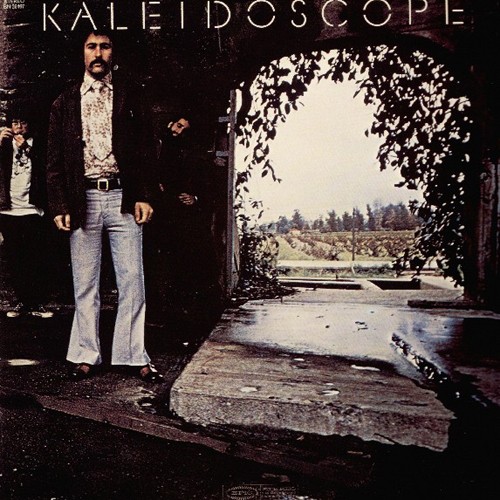
The Kaleidoscope w
ere from Los Angeles, and they were decades ahead of their time. They had pretty much invented World Music, and pretty much no one was ready for it. In June 1969, the band had released their third album on Epic, Incredible! Kaleidoscope. It lived up to its name. While the band was still fronted by guitarist/multi-instrumentalist David Lindley, multi-instrumentalist Solomon Feldthouse and organist/multi-instrumentalist Chester Crill, they had a new rhythm section. Paul Lagos was the drummer and Stuart Brotman played bass. Anyone who ever got to see the band live was lucky.

The Avalon had had a reputation for finding cool bands before anyone else. If Helms had booked a band at the Avalon, and they got good notices, Bill Graham wasn't far behind, offering them more money and a higher profile. Kaleidoscope had played the Avalon various times since early '67, and while they were too far ahead of their time for most listeners, other musicians just about lost their minds. When Kaleidoscope had played the Avalon on May 24-26, 1968 (booked between the Youngbloods and the Hour Glass, with Duane and Gregg Allman), for example, the Yardbirds were booked at the Fillmore West the same weekend. Jimmy Page has told the story of taking time out between sets to walk the 12 blocks over to the Avalon just to catch the Kaleidoscope, and then walking the 12 blocks back to play his late night set with the Yardbirds.


Charlie Musselwhite
had been born in Mississippi and moved to Memphis, and then ultimately to Chicago.  He was one of a small number of white musicians in Chicago (including Nick Gravenites, Paul Butterfield, Mike Bloomfield, Elvin Bishop and a few others) who had stumbled onto the blues scene by themselves. 
A Chicago club regular, Musselwhite eventually recorded an album for Vanguard in 1967 called Stand Back, which started to receive airplay on San Francisco’s new underground FM station, KMPX-fm. Friendly with the Chicago crowd who had moved to San Francisco, his band was offered a month of work in San Francisco in mid-1967, so Musselwhite took a month’s leave from his Chicago day job and stayed for a couple of decades.

Musselwhite had released his second album on Vanguard, Stone Blues, in 1968. Sometime in 1969, Vanguard released Tennessee Woman. Musselwhite was a regular on the Bay Area club scene, and had played the Fillmore and Avalon as well. In Chicago, Musselwhite had been just one of many fine blues acts, but in the Bay Area he stood out. Musselwhite had been a regular at the Avalon Ballroom, but he had never graduated to the Fillmore or Fillmore West. He was excellent live, but a Musselwhite show was still not going to be a must-see event for local rock fans.


Congress of Wonders
were a comedy trio from Berkeley, initially from the UC Berkeley drama department and later part of Berkeley’s Open Theater on College Avenue, a prime spot for what were called “Happenings” (now ‘Performance Art’).  The group had performed at the Avalon and other rock venues.

Ultimately a duo, Karl Truckload (Howard Kerr) and Winslow Thrill (Richard Rollins) created two Congress of Wonders albums on Fantasy Records (Revolting and Sophomoric). Their pieces “Pigeon Park” and “Star Trip”, although charmingly dated now, were staples of San Francisco underground radio at the time ("Pigeon Park" is from their 1970 debut album Revolting). The duo was one of a number of comedy troupes to take advantage of the recording studio, overdubbing voices and sound effects in stereo, to enhance the comedy.


What Happened?

We actually know a little bit about this weekend. In an interview with music scholar Jake Feinberg, David Lindley described sitting upstairs at the Family Dog and listening to Charlie Musselwhite's band. Lindley and his fellow band members thought that Musselwhite had an innovative saxophonist, somewhat out of character. They went down to the stage to discover that Musselwhite's band featured the unique steel guitarist Freddie Roulette. Roulette (b. 1939) was from New Orleans, but had moved to Evanston, IL (a Chicago suburb, and had learned to jam the blues on a lap steel guitar. Lindley was completely fascinated with Roulette's approach to the instrument. Roulette had played with blues guitarist Earl Hooker since 1965, and he would move to San Francisco to play with Musselwhite. Roulette had played on the Tennessee Woman album. Lindley's innovative steel guitar playing with Jackson Browne and others is world famous, and it seems that Roulette was a foundational building block for him.

While just a fragmentary memory, Lindley's recollection is actually more than we usually hear about Family Dog on The Great Highway shows.


For the next post in this series (October 7-16, 1969, various bands), see here


Friday, May 20, 2022

September 15-26, 1969 Family Dog on The Great Highway, 660 Great Highway, San Francisco, CA [FDGH '69 XXI]


The Family Dog on The Great Highway, at 660 Great Highway, ca. 1969

The Family Dog on The Great Highway, 660 Great Highway, San Francisco, CA
The Family Dog was a foundation stone in the rise of San Francisco rock, and it was in operation in various forms from Fall 1965 through the Summer of 1970. For sound historical reasons, most of the focus on the Family Dog has been on the original 4-person collective who organized the first San Francisco Dance Concerts in late 1965, and on their successor Chet Helms. Helms took over the Family Dog in early 1966, and after a brief partnership with Bill Graham at the Fillmore, promoted memorable concerts at the Avalon Ballroom from Spring 1966 through December 1968. The posters, music and foggy memories of the Avalon are what made the Family Dog a legendary 60s rock icon.

In the Summer of 1969, however, with San Francisco as one of the fulcrums of the rock music explosion, Chet Helms opened another venue. The Family Dog on The Great Highway, at 660 Great Highway, on the Western edge of San Francisco, was only open for 14 months and was not a success. Yet numerous interesting bands played there, and remarkable events took place, and they are only documented in a scattered form. This series of posts will undertake a systematic review of every musical event at the Family Dog on The Great Highway. In general, each post will represent a week of musical events at the venue, although that may vary slightly depending on the bookings.

If anyone has memories, reflections, insights, corrections or flashbacks about shows at the Family Dog on the Great Highway, please post them in the Comments.

660 Great Highway in San Francisco in 1967, when it was the ModelCar Raceway, a slot car track

The Edgewater Ballroom, 660 Great Highway, San Francisco, CA

As early as 1913, there were rides and concessions at Ocean Beach in San Francisco, near the Richmond District. By 1926, they had been consolidated as Playland-At-The-Beach. The Ocean Beach area included attractions such as the Sutro Baths and the Cliff House. The San Francisco Zoo was just south of Playland, having opened in the 1930s. One of the attractions at Playland was a restaurant called Topsy's Roost. The restaurant had closed in 1930, and the room became the Edgewater Ballroom. The Ballroom eventually closed, and Playland went into decline when its owner died in 1958. By the 1960s, the former Edgewater was a slot car raceway. In early 1969, Chet Helms took over the lease of the old Edgewater.
One of the only photos of the interior of the Family Dog on The Great Highway (from a Stephen Gaskin "Monday Night Class" ca. October 1969)

The Family Dog On The Great Highway

The Great Highway was a four-lane road that ran along the Western edge of San Francisco, right next to Ocean Beach. Downtown San Francisco faced the Bay, but beyond Golden Gate Park was the Pacific Ocean. The aptly named Ocean Beach is dramatic and beautiful, but it is mostly windy and foggy. Much of the West Coast of San Francisco is not even a beach, but rocky cliffs. There are no roads in San Francisco West of the Great Highway, so "660 Great Highway" was ample for directions (for reference, it is near the intersection of Balboa Street and 48th Avenue). The tag-line "Edge Of The Western World" was not an exaggeration, at least in American terms.

The Family Dog on The Great Highway was smaller than the Bill Graham's old Fillmore Auditorium. It could hold up to 1500, but the official capacity was probably closer to 1000. Unlike the comparatively centrally located Fillmore West, the FDGH was far from downtown, far from the Peninsula suburbs, and not particularly easy to get to from the freeway. For East Bay or Marin residents, the Great Highway was a formidable trip. The little ballroom was very appealing, but if you didn't live way out in the Avenues, you had to drive. As a result, FDGH didn't get a huge number of casual drop-ins, and that didn't help its fortunes. Most of the locals referred to the venue as "Playland."

SF Good Times ad for The Family Dog on The Great Highway from September 18, 1969

The Family Dog on The Great Highway had been teetering on the edge of solvency since it had opened in June, 1969. In the second half of September, all the signs pointed to falling off the cliff. The Dog had usually managed to find a steady supply of old Avalon stalwarts to headline each weekend, but even those bands had stopped playing the venue. Publicity for the Dog was almost non-existent. There was a weekly ad in the San Francisco Good Times, an underground paper, but that is just about our only source of information about performances at the Family Dog during this period. Writers in the local mainstream and underground papers stopped writing about any events there. Very few events were even in the listings of the papers, too, meaning the Dog staff--if there was one--wasn't even doing the basic work of issuing press releases and phoning newspapers.

At this point, the Family Dog on The Great Highway was more like a Community Center. Various local groups used the venues to put on shows of various kinds. Sometimes the shows were probably pretty interesting, but there wasn't anything coherent about the bookings. It's true that the ethos of the Family Dog, represented by the Tuesday group meeting of "The Commons," favored a sort of Community Center. The problem was that such a model wasn't sustainable without some profitable bookings. The last two weeks of September are a random--if interesting--catalog of different hippie cultures in San Francisco at the time.

Stephen Gaskin's 1980 book, Amazing Dope Tales and Haight Ashbury Flashbacks

September 15, 1969 Family Dog on The Great Highway, San Francisco, CA: Monday Night class

Popular San Francisco State College professor Stephen Gaskin held his "Monday Night Class" regularly. It's not clear whether this was every Monday night, or only some Monday nights. SF State was just down the road a bit, at 19th Avenue and Holloway. Gaskin (1935-2014), a Literature instructor, talked on Monday Nights about what we would now call "Consciousness Expansion" or "Human Potential," but at the time he was called a "Hip Guru." This isn't my topic, but I will say that Gaskin was not a hustler or a charlatan, whatever you think of Self-Help.  

Gaskin's Monday class was free, and apparently he regularly filled the Family Dog. The picture of the Dog interior at the top of the post was taken at a Gaskin lecture, for example. Still, while apparently Gaskin took some donations to cover his own expenses, in itself the class wasn't a profit-maker, and apparently the Family Dog must not have been able to convert Gaskin's "students" into weekend customers.

September 16, 1969 Family Dog on The Great Highway, San Francisco, CA: In Search of America (Tuesday)
I have no idea what "In Search Of America" might have been.

September 17, 1969 Family Dog on The Great Highway, San Francisco, CA: Film and Light Spectacular (Wednesday)
The Light Show operators were trying to make their Art into a viable economic commodity. Since we have no eyewitnesses, we can only guess about this event. Presumably there were old silent movies, or nature films, or something, and probably records, and the light shows performed to those. This had been tried a few weeks before at the Dog, but apparently with only minimal success.

About a decade later, Planetarium-type light shows, like "Laserium" became popular, doing laser light shows to Pink Floyd records and the like, so the idea wasn't as far-fetched as it sounds.

September 18, 1969 Family Dog on The Great Highway, San Francisco, CA: Richmond Symphony (Thursday)
The Richmond District was the San Francisco neighborhood just to the East of the Family Dog, running all the way along Golden Gate Park. The Richmond Symphony was likely some sort of neighborhood orchestra, although it could just as well have been a jazz ensemble or something. "Richmond Symphony" is hard to Google, so any insight is welcome in the Comments.

Doug McKechnie and his Moog Synthesizer, ca 1968

September 19-21, 1969 Family Dog on The Great Highway, San Francisco, CA: Circus Of The Absurd Costume Ball: Carlos Carvajal/Moog Synthesizer of the SF Radical Laboratories/Shag/Devil's Kitchen (Friday-Sunday)

What was this event? Carlos Carvajal was ballet master and associate choreographer for the San Francisco Ballet at the time. In Spring 1970, Carvajal put on a dance performance that was very well-reviewed by staff critic Robert Commanday, and also got Carvajal fired. He went on to become an important figure in modern dance. The ad says that his presentation includes performers from the San Francisco Ballet and Opera.

As for the Doug McKechnie's SF Radical Laboratories, people were only just becoming aware of Moog Synthesizers. Walter Carlos had released his popular Switched On Bach album, and George Harrison had released Electronic Sounds. It's safe to say that almost no one had heard a live performance with a Moog Synthesizer.

Doug McKechnie's history was unique in so many ways. Around about 1968, McKechnie had lived in a warehouse type building on 759 Harrison (between 3rd and 4th Streets-for reference, 759 Harrison is now across from Whole Foods). Avalon Ballroom soundman and partner Bob Cohen lived in the building, and Blue Cheer (and Dan Hicks and The Hot Licks) practiced upstairs. One day, McKechnie's roommate Bruce Hatch acquired a Moog Synthesizer, and the instrument arrived in boxes, awaiting assembly. At the time, a synthesizer was like a musical unicorn, only slightly more real than a myth. Hatch had the technical ability to assemble the machinery, but he was basically tone-deaf. So McKechnie focused on actually making music on the Moog. 

McKechnie and Hatch referred to their enterprise as Radical Sound Labs. Word got around--McKechnie helped the Grateful Dead record the strange outtake "What's Become Of The Baby" on the 1969 Aoxomoxoa sessions in San Mateo (his memories are, uh, fuzzy). Thanks to the Dead, McKechnie and his Moog--the size of a VW Bus--can be seen in the Gimme Shelter movie, providing peculiar music on a gigantic sound system for the anxious masses. When McKechnie opened for rock shows at the Family Dog, he used the name "SF Rad Labs." McKechnie had just played the Family Dog a few weeks earlier, on Sunday, August 31.

Unlike the very few other synthesizer artists, McKechnie was not associated with an academic endeavor, he wasn't trying to sell an instrument, and he didn't have any record company affiliation. None of those things were bad, by the way--it's just that the thoroughly hippie underground McKechnie could do what we wanted. Now, probably, what he played at the Family Dog wouldn't have held up that well over time, if there was a tape. But at the time, a Moog was a Unicorn. If you saw at a Unicorn at a farm, you wouldn't say "it's not a good plow horse, though." So this must have been pretty far out to listeners at the time, even if it would sound less so to us now.

Devil's Kitchen were a bluesy quartet from Carbondale, IL, who had relocated to San Francisco and were sort of a house band at the Family Dog. I recognize Shag from listings, but I don't know anything about them.

The weekend sounds interesting--progressive dance, a cutting edge performance by an electronic musician, and some local rock bands. But was anyone going to go? 

September 22, 1969 Family Dog on The Great Highway, San Francisco, CA: Monday Night class

September 23, 1969 Family Dog on The Great Highway, San Francisco, CA: Unbirthday Party (Tuesday)
September 24, 1969 Family Dog on The Great Highway, San Francisco, CA: Games Night
(Wednesday)
The Tuesday and Wednesday listings suggest that the Family Dog was open, but not much else. Not a sign of a robust business. There wasn't a bar at the Family Dog, so walk-in business didn't really net the venue anything.

Ralph Gleason wrote about the Thursday Light Show at the Dog in his Chronicle column of Wednesday, September 24 1969

September 25, 1969 Family Dog on The Great Highway, San Francisco, CA: Light Show Jam (Thursday)
In August, the Family Dog had held a Light Show event on a Tuesday night. Gleason wrote:

Tomorrow night at the Family Dog there's the second "San Francisco Light Show Jam and Preserves" with Crimson Madness, Optic Illusion, Sweet Misery, Clear Light Drive, Jerry Abrams Head Lights, Dr. Zarkov, Extraordinary Light Productions, Lightest Show on Earth, Albatross, Abercrombie Images, Missionary Light and Garden of Delights. Music is from unissued tapes of S.F. groups plus classical and electronic tapes.
A variety of light show operators performed their shows to vintage tapes from the Avalon. There had been a similar show on August 26, so I looked into the trail of breadcrumbs, and it seems that the Avalon tapes were destroyed (by owner/taper Bob Cohen) to avoid a crooked record deal. While a few tracks were released as Vintage Dead and Historic Dead on MGM/Sunflower Records in 1971, the balance of the tapes were destroyed by Cohen. Thus it means that in August, and probably in September, what few fans there were heard some 1966 shows by the Grateful Dead and others that were never heard again.

The SF Good Times ad for The Family Dog on The Great Highway from September 25, 1969

September 26-28 1969 Family Dog on The Great Highway, San Francisco, CA:Rhythm Dukes w/Jerry Miller/Floating Bridge/surprise group (Friday-Sunday)
The weekend headliner at the Family Dog was the Rhythm Dukes, a Santa Cruz band featuring Jerry Miller of Moby Grape. The original version of the band had another member of Moby Grape, former drummer Don Stevenson, who played rhythm guitar. Bassist John Barrett and drummer John "Fuzzy" Oxendine, both previously in a Santa Cruz band called Boogie, filled out the group. After one show, however, Stevenson had dropped out of the band. The Rhythm Dukes then toured the Midwest as a trio, often billed (against their wishes) as "Moby Grape" (Italian historian Bruno Ceriotti has a detailed history of the band).


Floating Bridge
were from Seattle. They were a “heavy” band featuring the twin guitar leads of Rich Dangel and Joe Johansen. They had been an established band in Seattle and the Pacific Northwest since about early 1968, but were probably touring California in support of their album on Vault Records. Dangel had been the lead guitarist for Northwest legends The Wailers (today mostly known as The Fabulous Wailers, to distinguish them from Bob Marley) and Dangel was widely regarded as one of the best guitarists in Seattle (not least by his former roommate, Larry Coryell). At various junctures, Floating Bridge also featured an electric cellist (who doubled on saxophone), setting them apart from most contemporaries.

The Wailers, from Tacoma, WA had hit it big nationally with the song “Tall Cool One.” The Wailers and The Sonics had been the anchors of the early 60s Tacoma/Seattle scene, particularly a place called The Spanish Castle (memorialized by Jimi Hendrix in “Spanish Castle Magic”). Dangel had left around 1965 (The Wailers continued on, as they do to this day) and moved to California. After briefly forming a band called The Rooks, he ended up in The Time Machine, in San Diego. When the Time Machine broke up, Dangel and another member (bassist Joe Johnson) moved back to Seattle and formed The Floating Bridge.

The Floating Bridge were fondly remembered by those who saw them live. Their 1969 debut album on Vault Records featured a lengthy jam on a medley of “Eight Miles High” and “Paint It Black.” Dangel continued to be a highly regarded guitarist on the Seattle scene until his death in 2002.

What Happened?
Rather ominously, in his Friday roundup of weekend shows in the SF Chronicle, Ralph Gleason led off by saying "At the Family Dog (F, S&S): I dunno." This was not a good sign. The diligent Gleason had access to all the press releases, and venues would regularly phone the paper (or Gleason directly) with updates. Gleason listed Dog headliners almost every weekend--saying he didn't know was a total failure on the Dog's part. It suggests that maybe the shows were canceled. 

The deadline for the Friday (September 26) Chronicle would have been Thursday at noon, far later than the ad in the SF Good Times. At best--and this isn't saying much--it's a complete failure by the Dog's staff to let the most important music writer in the Bay Area know who was playing this weekend. Note that on the only ad for the venue, the copy spelled the star's name wrong (Terre Miller instead of Jerry Miller). It's not something that inspires confidence.

As to the gallant listing in the Good Times ad that said "Surprise Group," Gleason would have indicated that if he had known. He wouldn't have broken a contract by naming them, but he would have given readers a heads up to pay attention. Instead, he said "I dunno." If the Rhythm Dukes and Floating Bridge played, the music would have been very good, but there's distinct doubt that they played at all.

For the next entry in the series (October 3-5 '69, Kaleidoscope), see here