Showing posts with label Kaleidoscope. Show all posts

Sunday, September 25, 2022

March 20-22, 1970 Family Dog on The Great Highway, 660 Great Highway, San Francisco, CA: Big Brother and The Holding Company/Kaleidoscope/Devil's Kitchen [FDGH '70 XI]


The Family Dog on The Great Highway, at 660 Great Highway, ca. 1969

The Family Dog on The Great Highway, 660 Great Highway, San Francisco, CA
The Family Dog was a foundation stone in the rise of San Francisco rock, and it was in operation in various forms from Fall 1965 through the Summer of 1970. For sound historical reasons, most of the focus on the Family Dog has been on the original 4-person collective who organized the first San Francisco Dance Concerts in late 1965, and on their successor Chet Helms. Helms took over the Family Dog in early 1966, and after a brief partnership with Bill Graham at the Fillmore, promoted memorable concerts at the Avalon Ballroom from Spring 1966 through December 1968. The posters, music and foggy memories of the Avalon are what made the Family Dog a legendary 60s rock icon.

In the Summer of 1969, however, with San Francisco as one of the fulcrums of the rock music explosion, Chet Helms opened another venue. The Family Dog on The Great Highway, at 660 Great Highway, on the Western edge of San Francisco, was only open for 14 months and was not a success. Yet numerous interesting bands played there, and remarkable events took place, and they are only documented in a scattered form. This series of posts will undertake a systematic review of every musical event at the Family Dog on The Great Highway. In general, each post will represent a week of musical events at the venue, although that may vary slightly depending on the bookings.

If anyone has memories, reflections, insights, corrections or flashbacks about shows at the Family Dog on the Great Highway, please post them in the Comments.

660 Great Highway in San Francisco in 1967, when it was the ModelCar Raceway, a slot car track

The Edgewater Ballroom, 660 Great Highway, San Francisco, CA

As early as 1913, there were rides and concessions at Ocean Beach in San Francisco, near the Richmond District. By 1926, they had been consolidated as Playland-At-The-Beach. The Ocean Beach area included attractions such as the Sutro Baths and the Cliff House. The San Francisco Zoo was just south of Playland, having opened in the 1930s. One of the attractions at Playland was a restaurant called Topsy's Roost. The restaurant had closed in 1930, and the room became the Edgewater Ballroom. The Ballroom eventually closed, and Playland went into decline when its owner died in 1958. By the 1960s, the former Edgewater was a slot car raceway. In early 1969, Chet Helms took over the lease of the old Edgewater.
One of the only photos of the interior of the Family Dog on The Great Highway (from a Stephen Gaskin "Monday Night Class" ca. October 1969)


The Family Dog On The Great Highway

The Great Highway was a four-lane road that ran along the Western edge of San Francisco, right next to Ocean Beach. Downtown San Francisco faced the Bay, but beyond Golden Gate Park was the Pacific Ocean. The aptly named Ocean Beach is dramatic and beautiful, but it is mostly windy and foggy. Much of the West Coast of San Francisco is not even a beach, but rocky cliffs. There are no roads in San Francisco West of the Great Highway, so "660 Great Highway" was ample for directions (for reference, it is near the intersection of Balboa Street and 48th Avenue). The tag-line "Edge Of The Western World" was not an exaggeration, at least in American terms.

The Family Dog on The Great Highway was smaller than the Bill Graham's old Fillmore Auditorium. It could hold up to 1500, but the official capacity was probably closer to 1000. Unlike the comparatively centrally located Fillmore West, the FDGH was far from downtown, far from the Peninsula suburbs, and not particularly easy to get to from the freeway. For East Bay or Marin residents, the Great Highway was a formidable trip. The little ballroom was very appealing, but if you didn't live way out in the Avenues, you had to drive. As a result, FDGH didn't get a huge number of casual drop-ins, and that didn't help its fortunes. Most of the locals referred to the venue as "Playland."

The Family Dog In 1969
Chet Helms had opened the Family Dog at 660 Great Highway to much fanfare on June 13, 1969, with a packed house seeing the Jefferson Airplane and The Charlatans. One of the goals was that the Dog would feature mostly San Francisco bands and a variety of smaller community events and groups. Since so many San Francisco bands were successful, and had record contracts, this didn't confine the venue to obscurity. A lot of great bands played the Family Dog in 1969, but the distant location and the gravitational pull of major rock events hosted elsewhere in the Bay Area kept the Family Dog isolated. We know only the most fragmentary bits about music played, events and audiences throughout the year.  Despite the half-year of struggle, Helms had kept the Family Dog on The Great Highway afloat. He had entered the new year of 1970 with a new plan.


The San Francisco Good Times ad (March 19) for the March 20-22 weekend at the Family Dog is somewhat cryptical, a sign that they were appealing to a narrow audience

March 20-22, 1970 Family Dog on The Great Highway, 660 Great Highway, San Francisco, CA: Big Brother and The Holding Company/Kaleidoscope/Devil's Kitchen (Friday-Sunday)
No band was more synonymous with Chet Helms and the Family Dog than Big Brother and The Holding Company. Back in the Fall of '65, Helms would host jam sessions in the basement of a big boarding house at 1090 Page Street. Some bands formed out of the jams, and a list of potential names was made up. Chet took two of the most promising--"Big Brother" and "The Holding Company"--and combined them for the group he would manage. A few months later, Helms would recruit fellow Texan Janis Joplin to be the lead singer, and the band rocketed to stardom.

Helms and Big Brother had parted ways--amicably--in the Fall of 1966, but Big Brother had continued to play the Avalon Ballroom right up until the end. Indeed, Big Brother had played the last Family Dog show at the Avalon on December 1, 1968. After that, Janis had left the group, bound for stardom, and Big Brother disintegrated. Guitarist Sam Andrew had gone on tour with Janis, fellow guitarist James Gurley had gone to the desert, and Peter Albin (bass) and Dave Getz (drums) had gone on a Spring tour with Country Joe and The Fish.

By Fall 1969, however, Big Brother's members were ready to reconstruct the band. The original quartet played the Family Dog benefit at the Fillmore West on November 19, 1969, and then a few more low-key gigs. In February of 1970, they had headlined a weekend at the Family Dog on The Great Highway. By this time, guitarist David Schallock had been added to the group. The band had three guitarists, and--rather confusingly--Gurley had temporarily switched to bass, with Peter Albin moving to guitar. Producer Nick Gravenites sometimes sang with the band, too.


We have no information about either the February or March Big Brother shows. Were they well attended? What songs did they play? Big Brother and The Holding Company had started recording in Hollywood and San Francisco with Nick Gravenites, and Columbia would release the underrated Be A Brother around July of 1970. It's reasonable to assume that they may have done some of that material, but all that is just a guess.


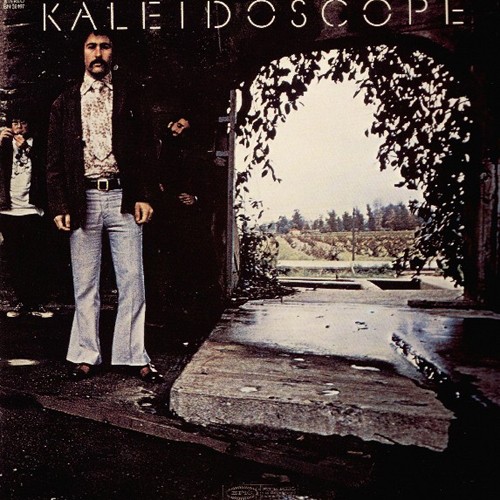
Kaleidoscope were from Los Angeles, and they were decades ahead of their time. They pretty much invented World Music, and pretty much no one was ready for it. In February, 1970 the band had released their fourth album on Epic, Bernice. On the album, the band's front line was guitarist/multi-instrumentalist David Lindley, multi-instrumentalist Solomon Feldthouse and organist/multi-instrumentalist Chester Crill, with too much instrument-switching to describe here. Paul Lagos was the drummer and Stuart Brotman played bass. Anyone who ever got to see the band live was lucky.

Kaleidoscope had been regulars at the Avalon, but were largely only popular with musicians (most famously Jimmy Page). Rock music fans were simply not yet ready for what Kaleidoscope could do. In 1969, Kaleidoscope had already played the Family Dog on two separate weekends (June 27-29 and October 3-5), and they returned for a final go-round. By the time of these shows, Kaleidoscope was falling apart and there had been several personnel changes. 

Solomon Feldthouse had left during the recording of Bernice, replaced by singer Jeff Kaplan (it's not clear how much Kaplan actually sang on the album). Right before the Family Dog shows, Chester Crill left the band, too (according to Crill, both were fired by David Lindley). Shortly afterwards, David Lindley left as well. It's not even certain if Lindley played the Family Dog shows. Lindley (the de facto leader by this time) told the remaining members that they were free to use the name, so there were a few Kaleidoscope dates after this, but they too had ground to a halt by April. The lineup for the Family Dog shows was probably

David Lindley-guitar, various instruments
Paul Lagos-drums
Ron Johnson-bass
Jeff Kaplan-vocals, piano
Richard Aplan -reeds, flute

As the decades have passed, the music world has caught up with Kaleidoscope, and save for the primitive recording techniques, their music sounds contemporary now. The band has had a few casual reunions over the years. 

Devil's Kitchen was a bluesy four-piece band from Carbondale, IL, that had relocated to San Francisco in late Summer 1969. For much of the Fall of 69, they had been kind of a "house band" at the Family Dog on The Great Highway. The group ultimately had little to show for it, however, and three of the four members returned to Illinois. Guitarist Robbie Stokes did stick around and remained part of the Bay Area music scene for the next dozen years.

Wolfgang's Vault has a tape of Devil's Kitchen from Saturday night (March 21, 1970) as well as Sunday night (March 22), and they were an enjoyable band. This seems to have been one of their last shows in the Bay Area, as far as I can tell. It is a peculiar curiosity that two tapes of the opening act have survived, in Bill Graham's archive of all places, with no trace of the headliner's tapes from those nights. Now, it's possible that some tapes were lost in the 1985 BGP fire, but it's strange that the Devil's Kitchen tapes even ended up in Wolfgang's Vault at all. Still, it's a minor but typical tale of the Family Dog on The Great Highway, as the oddest fragments of history survive, and we are left to try and piece together the whole from the potsherds.

For a link to the next post in the series (March 27-29, 1970-Youngbloods) see here

Sunday, May 29, 2022

October 3-5, 1969 Family Dog on The Great Highway, 660 Great Highway, San Francisco, CA: Kaleidoscope/Clover/Charlie Musselwhite [FDGH '69 XXII]


The Family Dog on The Great Highway, at 660 Great Highway, ca. 1969

The Family Dog on The Great Highway, 660 Great Highway, San Francisco, CA
The Family Dog was a foundation stone in the rise of San Francisco rock, and it was in operation in various forms from Fall 1965 through the Summer of 1970. For sound historical reasons, most of the focus on the Family Dog has been on the original 4-person collective who organized the first San Francisco Dance Concerts in late 1965, and on their successor Chet Helms. Helms took over the Family Dog in early 1966, and after a brief partnership with Bill Graham at the Fillmore, promoted memorable concerts at the Avalon Ballroom from Spring 1966 through December 1968. The posters, music and foggy memories of the Avalon are what made the Family Dog a legendary 60s rock icon.

In the Summer of 1969, however, with San Francisco as one of the fulcrums of the rock music explosion, Chet Helms opened another venue. The Family Dog on The Great Highway, at 660 Great Highway, on the Western edge of San Francisco, was only open for 14 months and was not a success. Yet numerous interesting bands played there, and remarkable events took place, and they are only documented in a scattered form. This series of posts will undertake a systematic review of every musical event at the Family Dog on The Great Highway. In general, each post will represent a week of musical events at the venue, although that may vary slightly depending on the bookings.

If anyone has memories, reflections, insights, corrections or flashbacks about shows at the Family Dog on the Great Highway, please post them in the Comments.

660 Great Highway in San Francisco in 1967, when it was the ModelCar Raceway, a slot car track

The Edgewater Ballroom, 660 Great Highway, San Francisco, CA

As early as 1913, there were rides and concessions at Ocean Beach in San Francisco, near the Richmond District. By 1926, they had been consolidated as Playland-At-The-Beach. The Ocean Beach area included attractions such as the Sutro Baths and the Cliff House. The San Francisco Zoo was just south of Playland, having opened in the 1930s. One of the attractions at Playland was a restaurant called Topsy's Roost. The restaurant had closed in 1930, and the room became the Edgewater Ballroom. The Ballroom eventually closed, and Playland went into decline when its owner died in 1958. By the 1960s, the former Edgewater was a slot car raceway. In early 1969, Chet Helms took over the lease of the old Edgewater.
One of the only photos of the interior of the Family Dog on The Great Highway (from a Stephen Gaskin "Monday Night Class" ca. October 1969)

The Family Dog On The Great Highway

The Great Highway was a four-lane road that ran along the Western edge of San Francisco, right next to Ocean Beach. Downtown San Francisco faced the Bay, but beyond Golden Gate Park was the Pacific Ocean. The aptly named Ocean Beach is dramatic and beautiful, but it is mostly windy and foggy. Much of the West Coast of San Francisco is not even a beach, but rocky cliffs. There are no roads in San Francisco West of the Great Highway, so "660 Great Highway" was ample for directions (for reference, it is near the intersection of Balboa Street and 48th Avenue). The tag-line "Edge Of The Western World" was not an exaggeration, at least in American terms.

The Family Dog on The Great Highway was smaller than the Bill Graham's old Fillmore Auditorium. It could hold up to 1500, but the official capacity was probably closer to 1000. Unlike the comparatively centrally located Fillmore West, the FDGH was far from downtown, far from the Peninsula suburbs, and not particularly easy to get to from the freeway. For East Bay or Marin residents, the Great Highway was a formidable trip. The little ballroom was very appealing, but if you didn't live way out in the Avenues, you had to drive. As a result, FDGH didn't get a huge number of casual drop-ins, and that didn't help its fortunes. Most of the locals referred to the venue as "Playland."


By October of 1969, the Family Dog on The Great Highway appears to have been surviving week to week. While they had begun in June with regular weekend bookings featuring headline acts, with albums and status, the ranking of the performers had declined. While the Family Dog was a nexus for interesting creative types, the lack of money meant that working bands only played the Dog as a last resort. For much of September, the venue had been more like a community center, with different artistic groups using it for their own events. The community focus was admirable, but financially unsustainable.

September 30, 1969 Family Dog on The Great Highway, San Francisco, CA: Commander Cody and His Lost Planet Airmen/Clover/Deluxe/Flying Circus Tom Mix Memorial Ball presented by the 13th Tribe (Tuesday)
On Tuesday, the Family Dog presented "The Tom Mix Memorial Ball," which was promoted as a country and western show. The 13th Tribe were a local organization that I recognize from contemporary posters, but I don't know anything about them. Based on their name, they sound like some sort of commune that promoted local rock events, but that is just my own speculation.

Today we think of Commander Cody and His Lost Planet Airmen as an established Bay Area band, and of course they would go on to release several albums on a variety of labels. In September of 1969, however, the band was newly-arrived in Berkeley from Ann Arbor, MI. The band's knowing mixture of honky-tonk country, Western Swing and songs about weed would find a comfortable home in the Bay Area, but their first album was still two years in the future. The Airmen, in fact, had played the Family Dog at least three times already in August, including opening for the Grateful Dead, but they had hardly played anywhere else save for weeknights at a tiny Berkeley club on University and San Pablo called Mandrake's

Clover's debut album was released on Fantasy Records in 1970

Clover and Flying Circus were Mill Valley bands, sharing a rehearsal hall and equipment. Clover, a country rock quartet with an R&B edge, would get signed by Fantasy Records, and would release their debut album on Fantasy Records in 1970. Clover had a complicated, up-and-down career, releasing four excellent but hardly-noticed albums. Fortunately, however, they were noticed by Nick Lowe, so they ended up backing Elvis Costello on My Aim Is True. Lead (and pedal steel) guitarist John McFee would end up in the Doobie Brothers--he's still in the band--and the various members of Clover mostly went on to musical successes in the later 70s. But in the late 60s, they were just a struggling quartet, with McFee on lead and pedal steel, Alex Call on vocals and guitar, John Ciambotti on bass and Mitch Howie on drums.

Flying Circus had existed in some form since 1966, and had released a few singles, but they had undergone numerous personnel changes. By '69, Flying Circus' lead guitarist was Bob McFee, brother of John. Flying Circus developed a following around the North Bay, but they never got as far even as Clover. Still, by all accounts they were a pretty good band.

Deluxe is unknown to me.

October 1, 1969 Family Dog on The Great Highway, San Francisco, CA: Maximum Speed Limit/Alligator/Old Davis/Straight Phunk (Wednesday)
Wednesday was listed as "New Band Night." The Fillmore West had a similar long-running program on Tuesday nights. Maximum Speed Limit was a Berkeley band, but I don't know anything else about them. Alligator is unknown to me, as is Straight Phunk. Old Davis was a Redwood City band. By 1970, teenage San Mateo guitarist Neal Schon was a member of Old Davis, but I don't think he was in the group yet.

October 3-5, 1969 Family Dog on The Great Highway, San Francisco, CA: Kaleidoscope/Charlie Musselwhite/Congress Of Wonders (Friday-Sunday)
After some clearly sub-par weeks, the Family Dog had some relatively established draws on the first weekend of October. All three bands were not only established Avalon acts, they had played the Family Dog on The Great Highway before as well. Headliners Kaleidoscope had played back in June, Charlie Musselwhite had played in July, and Congress of Wonders had played in June, July and August.


The Kaleidoscope w
ere from Los Angeles, and they were decades ahead of their time. They had pretty much invented World Music, and pretty much no one was ready for it. In June 1969, the band had released their third album on Epic, Incredible! Kaleidoscope. It lived up to its name. While the band was still fronted by guitarist/multi-instrumentalist David Lindley, multi-instrumentalist Solomon Feldthouse and organist/multi-instrumentalist Chester Crill, they had a new rhythm section. Paul Lagos was the drummer and Stuart Brotman played bass. Anyone who ever got to see the band live was lucky.

The Avalon had had a reputation for finding cool bands before anyone else. If Helms had booked a band at the Avalon, and they got good notices, Bill Graham wasn't far behind, offering them more money and a higher profile. Kaleidoscope had played the Avalon various times since early '67, and while they were too far ahead of their time for most listeners, other musicians just about lost their minds. When Kaleidoscope had played the Avalon on May 24-26, 1968 (booked between the Youngbloods and the Hour Glass, with Duane and Gregg Allman), for example, the Yardbirds were booked at the Fillmore West the same weekend. Jimmy Page has told the story of taking time out between sets to walk the 12 blocks over to the Avalon just to catch the Kaleidoscope, and then walking the 12 blocks back to play his late night set with the Yardbirds.


Charlie Musselwhite
had been born in Mississippi and moved to Memphis, and then ultimately to Chicago.  He was one of a small number of white musicians in Chicago (including Nick Gravenites, Paul Butterfield, Mike Bloomfield, Elvin Bishop and a few others) who had stumbled onto the blues scene by themselves. 
A Chicago club regular, Musselwhite eventually recorded an album for Vanguard in 1967 called Stand Back, which started to receive airplay on San Francisco’s new underground FM station, KMPX-fm. Friendly with the Chicago crowd who had moved to San Francisco, his band was offered a month of work in San Francisco in mid-1967, so Musselwhite took a month’s leave from his Chicago day job and stayed for a couple of decades.

Musselwhite had released his second album on Vanguard, Stone Blues, in 1968. Sometime in 1969, Vanguard released Tennessee Woman. Musselwhite was a regular on the Bay Area club scene, and had played the Fillmore and Avalon as well. In Chicago, Musselwhite had been just one of many fine blues acts, but in the Bay Area he stood out. Musselwhite had been a regular at the Avalon Ballroom, but he had never graduated to the Fillmore or Fillmore West. He was excellent live, but a Musselwhite show was still not going to be a must-see event for local rock fans.


Congress of Wonders
were a comedy trio from Berkeley, initially from the UC Berkeley drama department and later part of Berkeley’s Open Theater on College Avenue, a prime spot for what were called “Happenings” (now ‘Performance Art’).  The group had performed at the Avalon and other rock venues.

Ultimately a duo, Karl Truckload (Howard Kerr) and Winslow Thrill (Richard Rollins) created two Congress of Wonders albums on Fantasy Records (Revolting and Sophomoric). Their pieces “Pigeon Park” and “Star Trip”, although charmingly dated now, were staples of San Francisco underground radio at the time ("Pigeon Park" is from their 1970 debut album Revolting). The duo was one of a number of comedy troupes to take advantage of the recording studio, overdubbing voices and sound effects in stereo, to enhance the comedy.


What Happened?

We actually know a little bit about this weekend. In an interview with music scholar Jake Feinberg, David Lindley described sitting upstairs at the Family Dog and listening to Charlie Musselwhite's band. Lindley and his fellow band members thought that Musselwhite had an innovative saxophonist, somewhat out of character. They went down to the stage to discover that Musselwhite's band featured the unique steel guitarist Freddie Roulette. Roulette (b. 1939) was from New Orleans, but had moved to Evanston, IL (a Chicago suburb, and had learned to jam the blues on a lap steel guitar. Lindley was completely fascinated with Roulette's approach to the instrument. Roulette had played with blues guitarist Earl Hooker since 1965, and he would move to San Francisco to play with Musselwhite. Roulette had played on the Tennessee Woman album. Lindley's innovative steel guitar playing with Jackson Browne and others is world famous, and it seems that Roulette was a foundational building block for him.

While just a fragmentary memory, Lindley's recollection is actually more than we usually hear about Family Dog on The Great Highway shows.


For the next post in this series (October 7-16, 1969, various bands), see here


Thursday, January 13, 2022

June 27-29, 1969 Family Dog on The Great Highway, 660 Great Highway, San Francisco, CA: Barry Melton and The Fish/Kaleidoscope/Los Flamencos de la Santa Lucia (FDGH '69 III)


The Family Dog on The Great Highway, at 660 Great Highway, ca. 1969

The Family Dog on The Great Highway, 660 Great Highway, San Francisco, CA
The Family Dog was a foundation stone in the rise of San Francisco rock, and it was in operation in various forms from Fall 1965 through the Summer of 1970. For sound historical reasons, most of the focus on the Family Dog has been on the original 4-person collective who organized the first San Francisco Dance Concerts in late 1965, and on their successor Chet Helms. Helms took over the Family Dog in early 1966, and after a brief partnership with Bill Graham at the Fillmore, promoted memorable concerts at the Avalon Ballroom from Spring 1966 through December 1968. The posters, music and foggy memories of the Avalon are what made the Family Dog a legendary 60s rock icon.

In the Summer of 1969, however, with San Francisco as one of the fulcrums of the rock music explosion, Chet Helms opened another venue. The Family Dog on The Great Highway, at 660 Great Highway, on the Western edge of San Francisco, was only open for 14 months and was not a success. Yet numerous interesting bands played there, and remarkable events took place, and they are only documented in a scattered form. This series of posts will undertake a systematic review of every musical event at the Family Dog on The Great Highway. In general, each post will represent a week of musical events at the venue, although that may vary slightly depending on the bookings.

If anyone has memories, reflections, insights, corrections or flashbacks about shows at the Family Dog on the Great Highway, please post them in the Comments.

660 Great Highway in San Francisco in 1967, when it was the ModelCar Raceway, a slot car track

The Edgewater Ballroom, 660 Great Highway, San Francisco, CA

As early as 1913, there were rides and concessions at Ocean Beach in San Francisco, near the Richmond District. By 1926, they had been consolidated as Playland-At-The-Beach. The Ocean Beach area included attractions such as the Sutro Baths and the Cliff House. The San Francisco Zoo was just south of Playland, having opened in the 1930s. One of the attractions at Playland was a restaurant called Topsy's Roost. The restaurant had closed in 1930, and the room became the Edgewater Ballroom. The Ballroom eventually closed, and Playland went into decline when its owner died in 1958. By the 1960s, the former Edgewater was a slot car raceway. In early 1969, Chet Helms took over the lease of the old Edgewater.
One of the only photos of the interior of the Family Dog on The Great Highway (from a Stephen Gaskin "Monday Night Class" ca. October 1969)

The Family Dog On The Great Highway

The Great Highway was a four-lane road that ran along the Western edge of San Francisco, right next to Ocean Beach. Downtown San Francisco faced the Bay, but beyond Golden Gate Park was the Pacific Ocean. The aptly named Ocean Beach is dramatic and beautiful, but it is mostly windy and foggy. Much of the West Coast of San Francisco is not even a beach, but rocky cliffs. There are no roads in San Francisco West of the Great Highway, so "660 Great Highway" was ample for directions (for reference, it is near the intersection of Balboa Street and 48th Avenue). The tag-line "Edge Of The Western World" was not an exaggeration, at least in American terms.

The Family Dog on The Great Highway was smaller than the Bill Graham's old Fillmore Auditorium. It could hold up to 1500, but the official capacity was probably closer to 1000. Unlike the comparatively centrally located Fillmore West, the FDGH was far from downtown, far from the Peninsula suburbs, and not particularly easy to get to from the freeway. For East Bay or Marin residents, the Great Highway was a formidable trip. The little ballroom was very appealing, but if you didn't live way out in the Avenues, you had to drive. As a result, FDGH didn't get a huge number of casual drop-ins, and that didn't help its fortunes. Most of the locals referred to the venue as "Playland."


June 27-29, 1969 Family Dog on The Great Highway, 660 Great Highway, San Francisco, CA:  Barry Melton and The Fish/Kaleidoscope/Los Flamencos de las Santa Lucia (Friday-Sunday)
Barry "The Fish" Melton had been playing for Chet Helms since October 21, 1966, when Country Joe and The Fish had first opened for Seattle's Daily Flash at the Avalon. The band had played there many times since. Back in Fall '66, they had been an underground Berkeley band with a self-released EP available at a few Berkeley shops. By Summer '69, Country Joe and The Fish were nationally known, with two best-selling albums on Vanguard that were staples of FM radio and college dorms nationwide.

Country Joe and The Fish had a new album, too, their third for Vanguard, Here We Are Again. The official release date was July, but the record had already been reviewed in the SF Chronicle and was probably available in stores. So, why, with a new album, was Barry Melton headlining the Family Dog without Joe McDonald? While the exact details aren't known, it's pretty likely that Country Joe and The Fish did not really exist as a functioning band in June, 1969, even with a new album.

Now, in fact, Joe McDonald and Barry Melton had always considered themselves a duo, not a band. The advice they were given in late 1966, however, when they signed with Vanguard, had made the other members of the group (David Cohen, Bruce Barthol and Gary "Chicken" Hirsh) equal partners. When Joe and Barry wanted to move on early in 1969, they had to buy out the other three. Joe and Barry would find new people to play with them live, but Country Joe and The Fish was a duo that had an electric supporting cast. No fans knew this at the time, nor would they have probably cared. As far as fans were concerned, Country Joe and The Fish were a band.

The last tour of the "original" Country Joe and The Fish had ended January 12, 1969 at Fillmore West. All their friends showed up to jam--Jerry Garcia, Mickey Hart, Jorma Kaukonen, Jack Casady and Steve Miller--and it even got recorded (and released in 1994). A new English band called Led Zeppelin had opened for them, however, so no one really recalled the event. In March 1969, Country Joe and The Fish had toured Europe with a new lineup. Peter Albin and Dave Getz, formerly of Big Brother, were on bass and drums, respectively. The new keyboard player was East Coaster Mark Kapner (how Kapner had hooked up with the duo isn't quite clear). That lineup toured the States in April and early May, but it was a one-time thing, as Big Brother had their own plans to reform.

Country Joe and The Fish would kick off their Summer tour a few weeks later, on July 18, 1969 at Fillmore West, with Joe Cocker and The Grease Band opening. By mid-August, the new lineup would be playing Woodstock. As far as I know, however, that band did not exist in June. The Woodstock lineup would be

  • Country Joe McDonald-vocals, guitar, harmonica
  • Barry "The Fish" Melton-lead guitar, vocals
  • Mark Kapner-organ, keyboards
  • Doug Metzner-bass
  • Greg Dewey-drums

Metzner was from the Greenwich Village band Group Image. Greg Dewey had been in the Berkeley band Mad River, who had only recently broken up. So who was playing at The Family Dog? We don't actually know--there isn't a review, there isn't a picture or a tape, and I'm not aware of eyewitness accounts. 

Joe McDonald and Barry Melton periodically played separately. The band had nearly broken up in late 1967. Joe had gone solo, and considered hiring a Vancouver band (the United Empire Loyalists). Melton, meanwhile, had toured with the other three members as "The Incredible Fish." In the nomenclature of local rock billing, if Melton was appearing as with "The Fish" it meant he would be playing electric, but without Country Joe. I think the Family Dog was a warmup gig for the new Fish lineup, and I suspect that Melton played with Kapner, Metzner and Dewey. 

Did Country Joe show up? Very likely not. McDonald had a two-week engagement with a satirical performance troupe called The Pitschel Players. He was appearing as part of their revue at The Intersection on Union Street, and it was widely advertised. As if that wasn't enough, on Sunday afternoon (June 29), Country Joe was headlining a show at the Frost Amphitheater in Stanford. So Joe was booked, and The Fish would be swimming without him. 


The Kaleidoscope w
ere from Los Angeles, and they were decades ahead of their time. They pretty much invented World Music, and pretty much no one was ready for it. In June 1969, the band had released their third album on Epic, Incredible! Kaleidoscope. It lived up to its name. While the band was still fronted by guitarist/multi-instrumentalist David Lindley, multi-instrumentalist Solomon Feldthouse and organist/multi-instrumentalist Chester Crill, they had a new rhythm section. Paul Lagos was the drummer and Stuart Brotman played bass. Anyone who ever saw the band live was lucky.

The Avalon had a reputation for finding cool bands before anyone else. If Helms booked a band at the Avalon, and they got good notices, Bill Graham wasn't far behind, offering them more money and a higher profile. Kaleidoscope had played the Avalon various times since early '67, and while they were too far ahead of their time for most listeners, other musicians just about lost their minds. When Kaleidoscope had played the Avalon on May 24-26, 1968 (booked between the Youngbloods and the Hour Glass, with Duane and Gregg Allman), the Yardbirds were booked at the Fillmore West the same weekend. Jimmy Page has told the story of taking time out between sets to walk the 12 blocks over to the Avalon just to catch the Kaleidoscope, and then walking the 12 blocks back to play his late night set with the Yardbirds.

In August 1968, the Kaleidoscope had finally played the Fillmore West, opening for the Grateful Dead (August 20-22), but they had never gotten over the hump. The hippie rock world--nor anywhere else--was just not ready for them. By 1969, they were back with Chet Helms, second on the bill at the Family Dog. David Lindley and Solomon Feldthouse had played the Jabberwock club in Berkeley, back in 1966, when Country Joe and The Fish were getting their start--Brooklynite Melton would play solo gigs as "Blind Ebbets Field"--so I wouldn't be surprised if some jamming took place. But we have no record of these shows, so we don't know.

Los Flamencos de Las Santa Lucias were a troupe of local Flamenco performers, but beyond recognizing their name I know nothing about the group.

For a link to the next post (July 4-6, 1969 Flying Burrito Brothers), see here