Friday, September 25, 2020

700 West 32nd Avenue, Los Angeles, CA Shrine Exposition Hall: Rock Concerts 1966-69 (Vintage LA)


The Shrine Auditorium and Exposition Hall was built in 1925 by the Al Malikah Temple of the Masonic Order.  The building is in a Spanish Colonial Style with a Moorish flair.  The main entrance to the Auditorium was at 665 West Jefferson Street.  The stage is huge (186 by 72 feet) and it is a popular home for the Academy Awards.  The Auditorium has 6,489 seats on three levels.  The Exposition Hall, part of the same complex but around the corner at 700 West 32nd (at Figueroa) is a 56,000 square foot open area that was (and is) used for trade shows and conventions as well as rock concerts.  The Expo Hall had a capacity of about 5,000. In the late 1960s, most rock concert listings that say “Shrine” are typically at the Exposition Hall rather than the Auditorium. From the 1970s onward, however, almost all rock concerts listed as "The Shrine" were at the Auditorium. 

Los Angeles, more than any other American city, traffics in the glorification of its own history, particularly when it comes to entertainment. LA always celebrates old theaters or nightclubs from brighter days, so often historical sites are better known now than they were back in the day. Looking at the best retro-LA sites, like VintageLA, is like reading about American popular culture history from the inside, and 60s rock history has its place in that world. VintageLA, for example--which I can't recommend enough--has features on the Aquarius Theater and The Whisky-A-Go-Go. Yet it has nothing about the Shrine Exposition Hall, which tried to be the Fillmore scene for Los Angeles. 

In another post, I discussed how the rise and decline of the Shrine Expo Hall was linked to the role of the Grateful Dead, as it was in so many cities. In the sixties, at least, Los Angeles didn't really warm up to the Dead, and whether cause or corollary, the Shrine Expo Hall was far less important than comparable venues in other city. 

In writing my post on the Grateful Dead at the Shrine Expo Hall, I discovered that there was no accessible on-line repository of 60s rock shows at Shrine Expo Hall. This post acts as a companion piece to the other post, mainly just listing of Fillmore-type rock concerts at the Shrine Exposition Hall in the late 60s.
 

FREAK OUT Hot Spots! Insert to the first Mothers of Invention album, with a map of underground sites in 1966 Los Angeles (Freak Out album released June 1966) 

August 13, 1966 Shrine Exposition Hall, Los Angeles, CA:  Mothers of Invention/others
Los Angeles is an Entertainment industry town, and proud of it. Thus any cultural progression--new, contrarian, regressive, progressive, even revolutionary--gets assimilated into modern entertainment. Any performer who can be accused of "selling out" is also buying in, because it's the nature of the beast. In the Summer of '66, with the Vietnam War expanding, the Watts Riots still haunting the city and hair getting longer everywhere, Los Angeles had an underground rock scene, just like the Fillmore and Avalon. We like to think of Frank Zappa as an iconcoclast, or should I say, Frank wanted us to think that, but the very first Mothers Of Invention album included a map to LA's nascent 1966 underground.

One of the founding events of the Los Angeles underground was a show at the Shrine Exposition Hall on August 13, 1966, featuring the Mothers of Invention and several other (then unknown) acts. Just like the Family Dog events in San Francisco, Southern California "Freaks" suddenly realized there were a lot more people like them than they realized. The Shrine was apparently simply rented, probably because it was centrally located and available.

September 17, 1966 Shrine Exposition Hall, Los Angeles, CA: Mothers of Invention/Little Gary Ferguson/Factory/Count 5/West Coast Pop Art Experimental Band
October 15, 1966 Shrine Exposition Hall, Los Angeles, CA: Little Gary Ferguson/Davie Allan & The Arrows/Kenny Dino/The Mugwumps/Dolores Johnson/The Way Out/The Fabs/Vito
“Freak-In” Presented By Pat Morgan

In September and October there were sequels at The Shrine Expo Hall. The Mothers headlined in September, with some other undergroundish bands, and there was a light show as well. The October event didn't advertise the Mothers, and there were none after that. I have no idea what happened at the third one--was it a financial debacle, or did the cops hassle everyone? In any case, there were no more Freak Outs, but the Shrine Expo Hall had been proven as a possible venue for Fillmore style "Dance Concerts."

December 18, 1966  Shrine Exposition Hall, Los Angeles, CA: Big Brother and The Holding Company/Quicksilver  Messenger Service/Loving Impulse (possibly canceled)
Big Brother and Quicksilver booked a show at Shrine Expo Hall, and some ads circulate. I'm not convinced the concert actually took place. The importance of the ads, however, was that it meant that word had gotten around that the Shrine Expo Hall might make a Southern California Fillmore stand-in.


November 10-11, 1967 Shrine Exposition Hall, Los Angeles, CA: Buffalo Springfield/Grateful Dead/Blue Cheer Pinnacle Concerts Presents
By the fall of 1967, almost every psychedelic rock band had played Los Angeles, at a wide variety of venues, but there was no venue that played the role of the Fillmore. At the Fillmore, the mere fact of playing there meant you were a hip band, and fans came just to see what was hip. All over the West Coast, there were comparable places--the Crystal Ballroom in Portland, Eagles Auditorium in Seattle and The Retinal Circus in Vancouver, for example--but none in Southern California. The Kaleidoscope had been conceived to fill the void, but the City Council (and perhaps the cops) had throttled it pre-birth. There may have been a few hip little nightclubs, like the Magic Mushroom (at 11345 Ventura Blvd, formerly the Cinnamon Cinder), but no venue where the rising underground bands played profitably on a regular basis.

The first regular promoter of rock shows at the Shrine was Pinnacle Dance Concerts, the partnership of Sepp Donahower, Marc Chase and John Van Hamersveld. Supposedly some of the money was supplied by the heir to a cereal fortune, but that may be apocryphal. Pinnacle promoted concerts at the Shrine, both the Expo Hall and the Auditorium, on many weekends between November 1967 and August 1968. As far as I know, during the week the Shrine presented the usual run of corporate or civic events, but I don't know that for certain.

Van Hamersveld was a poster artist, at the time most famous for the promotional poster for the legendary surf film Endless Summer. By 1967, he was the the head of design for Capitol Records. Over the course of his career, Van Hamersheld did the covers for over 300 albums. Among his many, many classic album covers were the Beatles' Magical Mystery Tour, the Rolling Stones' Exile On Main Street and the Grateful Dead's Skeletons From The Closet. Van Hamesveld did the posters for Pinnacle Productions, and many of the posters were so good that we remain familiar with them today.

After Pinnacle's debut with Buffalo Springfield and The Dead, they put on a series of shows at Shrine Exposition Hall. Pinnacle only used the Shrine on weekends, and not even all of them, and the Exposition Hall seems to have had the usual trade events and the like throughout the whole period. There weren't as many rock concerts at the Shrine as at the Fillmore, but Van Hammersveld's posters are fairly recognizable today. Pinnacle must have made at least some money, since they kept putting on shows.

December 15-16, 1967 Shrine Exposition Hall, Los Angeles, CA: Moby Grape/Country Joe and The Fish/Blue Cheer Pinnacle Concerts Presents
The poster is very obscure

December 22-23, 1967 Shrine Exposition Hall, Los Angeles, CA: The Doors/Tim Buckley/Sweetwater
I am only indicating the Promoter when I can see it on a poster or read about it. The promoter for this weekend very likely was Pinnacle, but I don't know that yet.  Pinnacle seems to be on a plan to present shows two weekends a month at The Shrine Expo Hall, although that doesn't precisely work out on the calendar.

December 31, 1967 Shrine Exposition Hall, Los Angeles, CA: Wolfman Jack's New Year's Eve Party
Wolfman Jack was, of course, the legendary dj who worked out of XERB in Rosarito Beach, Mexico, bringing R&B to teenagers across the West with 50,000 watts of power.. The bands at this event were probably a lot of fun--The Olympics, The Soul Survivors ("Expressway To Your Heart"), Sam & Dave and so on. But it wasn't the Fillmore crowd. I don't really know anything else about this show. Still, it was a sign that Shrine Expo Hall was just for rent, and it wasn't just rented to hippies.

January 12-13, 1968 Shrine Exposition Hall, Los Angeles, CA:  Big Brother & The Holding Company/Blue Cheer/Mint Tattoo Pinnacle Presents

A handbill for the Jimi Hendrix Experience show at the Shrine Auditorium on February 10, 1968

February 10, 1968  Shrine Auditorium, Los Angeles, CA:  Jimi Hendrix Experience/Soft Machine/Electric Flag/Blue Cheer Pinnacle Concerts Presents
The most famous Pinnacle production at the Shrine has, ironically, had the effect of painting a misleading picture of Shrine concerts in the 1960s. Jimi Hendrix was not only huge, but a sensation. So, appropriately, the Jimi Hendrix Experience played the Shrine Auditorium. There were 6000 seats, instead of about 5000 for the Expo Hall, and reserved seats meant not only higher prices, but guaranteed places for important people. 

Since Hendrix was so rightfully famous, the poster and the event have had far more reach than any event at Shrine Expo Hall. So there has been an implicit, somewhat unstated assumption that "Shrine" rock concerts in the 60s were at the Auditorium. I believe there were more Shrine Auditorium concerts in the 1970s, as the rock market got bigger, and that lent weight to the assumption that 60s concerts were in the seated Auditorium.

February 23-24, 1968 Shrine Exposition Hall, Los Angeles, CA: Jefferson Airplane/Charlie Musselwhite/The Ceyleib People/Clear Light

March 15-16, 1968  Shrine Exposition Hall  Los Angeles  Cream/Buffalo Springfield/James Cotton/Mint Tattoo Pinnacle Dance Concert
Buffalo Springfield was unbilled.

March 29-30, 1968 Shrine Exposition Hall, Los Angeles, CA: Traffic/Quicksilver Messenger Service/Crumbs Pinnacle Presents

April 12-13, 1968 Shrine Exposition Hall, Los Angeles, CA: Electric Flag/Quicksilver Messenger Service/Charley Musselwhite  High Torr Dance Concert
I have never understood who High Torr represented, and why they put on shows on a couple of weekends, instead of Pinnacle.

May 2-3-4, 1968 Shrine Exposition Hall, Los Angeles, CA: Big Brother and The Holding Company/Albert King/PG&E  Pinnacle Presents

May 10-11, 1968  Shrine Exposition Hall, Los Angeles, CA: Mothers of Invention/Charley Musselwhite Blues Band/Sweetwater High Torr Presents

May 17, 1968 Shrine Exposition Hall, Los Angeles, CA: Grateful Dead/Steve Miller Band/Taj Mahal
May 18, 1968 Shrine Exposition Hall, Los Angeles, CA: Grateful Dead/Steve Miller Band/Taj Mahal/
[with Jefferson Airplane as unbilled guests] Pinnacle Presents
By May of '68, Pinnacle had put on a steady run of hip shows at the Shrine Expo Hall. For the weekend of May 18-19, the Grateful Dead returned, along with another rising San Francisco group, the Steve Miller Band. The Miller Band had just released their debut album on Capitol, the great Children Of The Future. Taj Mahal was a well-known local act, whose debut album had just been (or was about to be) released on Columbia. 

In line with being cool, the Airplane "showed up" at the Grateful Dead concert on Saturday night. This was probably announced on FM radio. Pinnacle would not have had the Airplane drop in if ticket sales had been more robust. It's worth noting that the Dead, Airplane and Steve Miller were all playing the Northern California Folk-Rock Festival in Santa Clara this weekend. The Dead would have played the Shrine on Friday night, flown up to San Jose, played the Fairgrounds on Saturday afternoon, and then returned to the Shrine for the Saturday night show.

llumaniti Alert: in an interview, poster artist and Pinnacle partner John Van Hammerseld, interviewed in Paul Grushkin's Art Of Rock book (p.255), says that George Lucas was part of the light show crew at some point in 67-68. So for those of you who feel that there was a secret connection between the Grateful Dead and Star Wars...

May 24-25, 1968 Shrine Exposition Hall, Los Angeles, CA: Chambers Brothers/Dr. John The Night Tripper/Velvet Underground/Salvation  Pinnacle Presents
Velvet Underground did not appear, and were replaced by Electric Flag. There is some intimation that Blues Project played, but that group only barely existed at the time and were based in the Bay Area.

May 31-June 1, 1968 Shrine Exposition Hall, Los Angeles, CA:  The Yardbirds/B.B. King/Sons of Champlin  Pinnacle Presents

June 14-15, 1968 Shrine Exposition Hall, Los Angeles, CA: Chambers Brothers/Chuck Berry/Peter Green's Fleetwood Mac Pinnacle Presents
This date is only known from the well-known Who poster for the end of June (below). I do not know if the show actually happened. I do know that Fleetwood Mac did not debut in North America until June 28. The Chambers Brothers had a big hit with "Time Has Come Today," so the show very well may have come off.

June 28-29, 1968 Shrine Exposition Hall, Los Angeles, CA: The Who/Peter Green’s Fleetwood Mac/Crazy World of Arthur Brown Pinnacle Presents
This was Fleetwood Mac’s American live debut. They had been scheduled for a few shows earlier in the month in San Francisco, but the band was delayed by visa problems. The Mac was still the original 4-piece lineup (Peter Green, Jeremy Spencer, John McVie and Mick Fleetwood) as Danny Kirwan would not join until August.

The second night (June 29) Steve Miller Band replaced Crazy World of Arthur Brown, due to an injury in the band.

July 11, 1968 Shrine Exposition Hall, Los Angeles, CA: Grateful Dead/Blue Cheer
July 12-13, 1968 Shrine Exposition Hall, Los Angeles, CA: Butterfield Blues Band/Velvet Underground/Sly and The Family Stone/The Rockets
Pinnacle Presents
The Grateful Dead returned in 1968 to headline a rare Thursday show at Shrine Expo Hall. It's hard to read the poster (done by Neon Park), but I'm not sure if it was a Pinnacle show. Certainly Pinnacle produced the weekend show, with a triple bill of Butterfield Blues Band, Sly and The Family Stone and the Velvet Underground. Presumably, the fact the Dead could play on a Thursday suggested they had an audience, but they weren't a big enough draw for a weekend show. 

The Rockets would go on to become Crazy Horse, and work with Neil Young.

July 19-20, 1968 Shrine Exposition Hall, Los Angeles, CA: Love/Rhinoceros
Another poster has Iron Butterfly/Barry Goldberg Reunion/The Collectors. I don't have any more information.

July 26-27, 1968 Shrine Exposition Hall, Los Angeles, CA: Pink Floyd/Jeff Beck/Blue Cheer Pinnacle Presents

August 2, 1968 Shrine Exposition Hall, Los Angeles, CA: Electric Flag/Ornette Coleman/Jeff Beck Group/Charles Lloyd/Rockets
August 3, 1968 Shrine Exposition Hall, Los Angeles, CA: Jeff Beck Group/Blue Cheer/Steve Miller Band/Big Mama Thornton and the original Hound Dog Band/Charles LloydAugust 4, 1968 Shrine Exposition Hall, Los Angeles, CA:  Butterfield Blues Band/Ike & Tina Turner/Electric Flag/Magic Sam/Steve Miller Band/Kaleidoscope
Pinnacle Presents
A poster shows Pinnacle presenting all this weekend's shows. Mike Bloomfield had left Electric Flag by this time. If the group played on Friday (Aug 2) and Sunday (Aug 4), it would have been among their last gigs.

August 4-5, 1968 Shrine Exposition Hall, Los Angeles, CA: Buddy Miles Express/Taj Mahal And His Great Plains Boogie Band/The Rockets
A newspaper ad says “Lifeline Presents a New Season At The Shrine.” This conflicts with the August 4 date above, but those dates have always been a bit uncertain. As is typical with the Shrine, it's unclear who "Lifeline" was, why they would book shows on a Sunday and Monday night, and why it might conflict with a pre-existing Pinnacle booking.

To add to the confusion, the disintegrating Electric Flag renamed themselves the Buddy Miles Express, since Miles was leading the band anyway. It makes even less sense that a band would play the same venue a few days after re-naming itself. Possibly the "Lifeline" ads are mis-dated, and replaced the Pinnacle weekend bookings.

August 23-24, 1968 Shrine Exposition Hall, Los Angeles, CA: Grateful Dead/Taj Mahal/others Pinnacle Presents
The Grateful Dead released one of their many archival cds (1992's Two From The Vault) from these Shrine shows. While a beautifully restored tape, in the Grateful Dead tradition, the liner notes suggest that the Dead played the Auditorium when they in fact played the Expo Hall. Clearly, everyone seems to have had a memory lapse... 

August 30-31, 1968 Shrine Exposition Hall, Los Angeles, CA: Barry Goldberg Reunion/Charlie Musselwhite/The Rockets 
Known from a newspaper ad. The ad says “Fresh Air: Arbor Day Presents Blues”

September 6-7, 1968 Shrine Exposition Hall, Los Angeles, CA: John Mayall/Junior Wells/Taj Mahal Pinnacle Presents
Pinnacle's last stand.  John Mayall's new Blues From Laurel Canyon quartet (with future Rolling Stones guitarist Mick Taylor leading the way, plus bassist Stephen Thompson and drummer Colin Allen) makes their American debut. According to Mayall (in Chris Hjort's indispensable Strange Brew book), Mayall called it "a big hit." This weekend is the last Pinnacle promotion.

An ad for a canceled concert at the Shrine Expo Hall on September 27-28, 1968, presented by "Zenith Sunrise," and featuring the Grateful Dead and Buddy Miles Express

September 27-28, 1968 Shrine Exposition Hall, Los Angeles, CA: Grateful Dead/Buddy Miles Express/Black Pearl/Little John Farm  [canceled] Zenith Sunrise presents
The Pinnacle company fell apart after August. An intriguing artifact is this poster for scheduled Grateful Dead concerts at Shrine Expo on the weekend of September 27-28. The poster says the shows will be presented by Zenith Sunrise. The concerts never happened. Presumably, Zenith Sunrise was a reformed version of Pinnacle, but it didn't happen. Much of the Pinnacle team reconvened as Scenic Sounds, and started putting on shows around Southern California. The Dead were very loyal to promoters, so I assume that if they took the September booking, it would have been with the same principals as Pinnacle.

November 2, 1968 Shrine Exposition Hall, Los Angeles, CA: Iron Butterfly Scenic Sounds presents
The Pinnacle group reconstituted itself as Scenic Sounds. I know that John Van Hammersveld was the Art Director for Capitol Records by this time, and the cereal heir was gone (if he was ever really there). Scenic Sounds rented Shrine Expo Hall again for a few more shows in the Fall.

November 9, 1968  Shrine Exposition Hall, Los Angeles, CA:   Love

November 29-30, 1968 Shrine Exposition Hall, Los Angeles, CA: Jeff Beck/Moody Blues/Ten Years After/Mint Tattoo Scenic Sounds presents
We know for certain from the poster that Scenic Sounds promoted this show.

December 6-7, 1968  Shrine Exposition Hall, Los Angeles, CA:  Mothers of Invention/Easy Chair/GTO’s/Alice Cooper/Wild Man Fischer
Frank Zappa and his manager (Herb Cohen) had two "imprints" (vanity labels) on Warners, Bizarre Records and Straight Records. This weekend was a celebration of all the acts on the label, probably subsidized by Warners. Presumably, the Scenic Sounds team ran the show. 

Captain Beefheart and His Magic Band may have played, unbilled (per fellow scholar Charles Ulrich) Easy Chair featured Jeff Simmons (was he playing Comedy Music?). All of the acts are now infamous or famous.

December 20-21, 1968 Shrine Exposition Hall, Los Angeles, CA:  Grateful Dead/Country Joe and The Fish/Spirit/Pulse/Sir Douglas Quintet/Mint Tattoo Scenic Sounds presents
It is largely forgotten that outside of San Francisco, Country Joe and The Fish had a higher profile than the Grateful Dead. Since Country Joe and The Fish had no bass player at the time, Mark Andes of Spirit filled the chair for these shows, per eyewitnesses.

There were two stages, apparently, to speed up the set changes. Still, it must have been a long evening.

December 31, 1968 Shrine Exposition Hall, Los Angeles, CA: Canned Heat/Pogo/Lee Micheals/Black Pearl/Love Army/Sweetwater Scenic Sounds presents a New Year’s Eve Extravaganza.
"Pogo" was Poco (Richie Furay, Jim Messina et al) before they changed their name. I know almost nothing else about this show save for the fact that it was advertised.

January 11, 1969 Shrine Exposition Hall, Los Angeles, CA: Vanilla Fudge/Spirit
Vanilla Fudge was the main touring act for Concerts West. In the Pacific Northwest, they had been booked with the newly-arrived Led Zeppelin. By January 11, however, Led Zeppelin was killing it at Fillmore West, and the Fudge were just another band past their prime. Spirit was probably good, though.

January 24-25, 1969 Shrine Exposition Hall, Los Angeles, CA:   Mothers of Invention/Sir Douglas Quintet/Fleetwood Mac/Black Pearl (double shows each night)
Fleetwood Mac released a cd in the 1990s, recorded on January 25. Apparently there were double shows each night, probably an effort to turn over the house and make it more profitable. The fact that this approach was only tried once suggests it wasn't a viable idea (I'm not even certain it happened that way). I can't tell from the poster who might have promoted this show.

January 31-February 1, 1969 Shrine Exposition Hall, Los Angeles, CA:  Pacific Gas & Electric/Charles Lloyd/James Cotton/Things To Come Scenic Sounds presents
The last Scenic Sounds event couldn't have sold a lot of tickets. In fact, the music would have been pretty good: P,G&E were a funky blues band from San Francisco, James Cotton and Charles Lloyd were always great, and Things To Come was a rising band on the LA club circuit. But who was going to buy tickets and drive over to see it? By definition, there are always million things to do in LA, and all teenagers had access to cars--why would they go see some obscure band from SF, even with some quality blues and jazz acts on the bill?

After this, Scenic Sounds moved their operation to The Rose Palace in Pasadena, and they no longer put on concerts at The Shrine. The Expo Hall and Theater were still rented out occasionally to concert promoters, however.

October 31, 1969 Shrine Exposition Hall, Los Angeles, CA: Delaney & Bonnie & Friends/Geronimo Black/Smoke/Eric Burdon/Southwind/C.K. Strong/Gypsy
“LA Rumor Control and Information Center Presents.”
The last gasp of Shrine Expo in the 60s was Halloween '69. I don't know who the promoter really was. The ad just says “The Shrine.”  Eric Burdon would have played with War. Delaney & Bonnie & Friends were mostly playing Topanga Canyon, and would not become well known until Eric Clapton toured with them a few months later. CK Strong featured singer Lynn Carey, who would later be in Mama Lion (the Mama Lion album cover is infamous, but don't google it at work, even though it was a legit album).

Aftermath: Pacific Presentations
The significant impact of Pinnacle concerts at Shrine Expo was the genesis of subsequent concert promotion companies. The Pinnacle team became Scenic Sounds. In early '69, Scenic Sounds started booking regular concerts on weekends at the Rose Palace in Pasadena. Many of the same bands who played The Shrine returned to play The Rose Palace. The ever-loyal Grateful Dead, for example,  played for Scenic twice more at the Rose Palace, on March 21-22, 1969 and then again on May 10.

Scenic Sounds in turn became Pacific Presentations. Pacific put on concerts all over the country, particularly in secondary markets like San Antonio or Rochester, where there weren't major promoters. Band like the Dead and Ten Year After were willing to play the hinterlands, but they wanted to work with promoters they already knew, so Pacific Presentations promoted a lot of shows all over the country.

Pacific grew into one of the largest concert companies in the United States, promoting thousands of concerts all over the US and Canada. The company established and popularized venues such as the Hollywood Palladium, and the Santa Barbara County Bowl. Pacific put together California Jam in 1974, which set the record for paid attendance. The company also promoted entire tours of Rod Stewart & The Faces all through the 1970s, helping make the artist one of the biggest attractions in the world. In the late 1970s, Gary Perkins, Brian Murphy, and Bob Bogdanovich split from Pacific and formed Avalon Attractions. Danny Kresky was also with Pacific. After around four years, Danny left to start his own company, DKE in Pittsburgh. Donahower stayed with Pacific and promoted tours with Bob Marley & The Wailers and other attractions. 
 
Sepp Donahower is currently the sole owner of Pacific Presentations. After Perkins left Avalon a few years later, Irving Azoff and Bob Getties bought into Avalon and it was sold to SFX a few years later. SFX was then sold to Clear Channel, and Clear Channel spun off their concert company into Live Nation, which now has merged with Ticketmaster.


Sunday, September 6, 2020

2119 University Avenue, Berkeley, CA November 24, 1974 Earthquake/Patti Smith (Things To Come)


Sometimes past, present and future come together in a single snapshot. The weekly listing in the San Francisco Chronicle for the Keystone Berkeley from Sunday, November 24, provides a view of rock history at the time, what was and what will be. The Chronicle's Sunday Datebook section, published on pink paper, and known around the Bay Area as "the Pink Section" published weekly listings for many of the venues in the Bay Area, not just music, but theater, movies, dance, museum, sports and many others. Mostly, they are just lists. Once in a while, however, a list can be a window.

Thanksgiving week, 1974: the big albums are The Rolling Stones' It's Only Rock and Roll and Elton John's Greatest Hits. Other big hits of the year include Stevie Wonder's Fullfillingness First Finale and Eric Clapton's 461 Ocean Boulevard. Rock giants still reign on Mount Olympus. At the Keystone Berkeley, a hippie beer joint near campus, where bluesy guitar solos are the order of the day, the upcoming week brings:

Sunday, November 24: Eli/Earthquake/Patti Smith
Monday, November 25: Eddie Money
Wednesday, November 27: Jerry Garcia and Merl Saunders/Paul Pena
Friday/Saturday, November 29-30: Earthquake/Eddie Money
At this time, Patti Smith had just released one single on an independent label. 

The Keystone Berkeley, at 2119 University Avenue (at Shattuck), ca. early 80s

Keystone Berkeley-Fall 1974
The Keystone Berkeley was a rockin' beer joint, and it was the second best-paying gig in the Bay Area. The best gig, of course, was playing a big concert for Bill Graham Presents. Most of those bookings went to out of town acts, however. Sure, some local bands got the call on occasion, and playing for Graham was both prestigious and financially rewarding. But a band wasn't going to make their rent every month if they only played for Graham, because they would only open a few shows a year.

Headlining a weekend at Keystone Berkeley was at least a 4-figure payday, however, and bands could come back every month or two. While some Keystone headliners had some albums and got some radio airplay, other bands had slugged it out playing weeknights, until they had a big enough following to get the call on the weekend. Blues were big at Keystone, and so were long guitar solos. Sure, there were a few tables and some seats along the edge, but mostly the crowd stood up and danced on the sawdust floor. Lots of beer was sold, lots and lots.

What was Patti Smith doing there?

In November 1974, Patti Smith released her debut single on MER records, "Hey Joe" b/w "Piss Factory"

Patti Smith and "Piss Factory"

Patti Smith had been part of the New York Artist underground since the late 1960s. She wrote poetry, appeared in a play and wrote some articles for rock magazines. Smith had even contributed lyrics to some Blue Oyster Cult albums, although BOC themselves were not well-known at this time. By 1974 she had evolved from reading poetry into performing original songs with guitarist Lenny Kaye. In July, Smith had recorded two songs for a single. The single was released by an independent label in November, 1974. Back in '74, DIY indie labels were unknown, and singles were pushed by record companies for AM radio airplay. Of course, Patti Smith anticipated the punk and indie movements by years, but no one could have known that at the time.

As for the record, Smith's take on the old chestnut "Hey Joe" was intentionally provocative. At this time, Patty Hearst was still a fugitive, and people were unaware that she had been coerced into cooperation. Although Smith's take on "Hey Joe" has not aged well, it was unlike anything that had come before it. The B-side, "Piss Factory" was mostly Patti reciting a grim poem about working in a factory. This too, was remarkable, and it, too, was not going to get played on any radio station. Remarkably, Smith played three dates at Bay Area rock clubs on the weekend of November 22-24, 1974, opening for some very unlikely bands at very unlikely--for Patti Smith--venues.

From the Friday SF Examiner: "Rock Show--Stoneground, and street poet Patti Smith, at Bimbo's, 1025 Columbus Ave, 9 p.m."

Bimbo's was a strange venue in North Beach, an old sort of cabaret nightclub. It was not a club, just a room available for rent. Stoneground had been a real hippie band, formed by KSAN-impresario Tom Donahue with much fanfare in 1971. They had folded in early 1973, but they had reformed for the first of many reunions. Stoneground played a kind of boogeying soul-rock. The original incarnation had been a 10-piece band with 5 lead singers, and but now they were just a four-piece. I'm assuming that Patti Smith was just backed by Lenny Kaye, although perhaps pianist Richard Sohl was along, too. I'm confident that a full band wouldn't have come West with her for such small gigs. Bimbo's was an odd place, and Patti Smith's general uniqueness might have actually worked better than you might think.

From the Saturday SF Examiner: "Rock Dance--Eddie Money and street poet Patti Smith, at Long Branch Saloon, 2504 San Pablo Ave, Berkeley, 9 p.m."

The Long Branch show has to be the most surreal Patti Smith event ever. The Long Branch was another Berkeley beer joint, about a mile further from campus than Keystone Berkeley. The Keystone liked to rock out, but there was some serious music there as well. Long Branch just liked to rock. The crowd at the Long Branch was younger, a lot nearer to 21, and the place was smaller than Keystone (300+ vs 500 at Keystone). Successful weekend bands at the Long Branch aspired to move up to the weeknight slot at Keystone Berkeley.

Keystone Berkeley, for all the loud guitars, got some University people. Long Branch--not so much. Patti Smith, being Patti Smith, may have thrived on a rowdy crowd hoping for some loud blues, probably mystified at way too many words and no drummer. But it would have been strange.

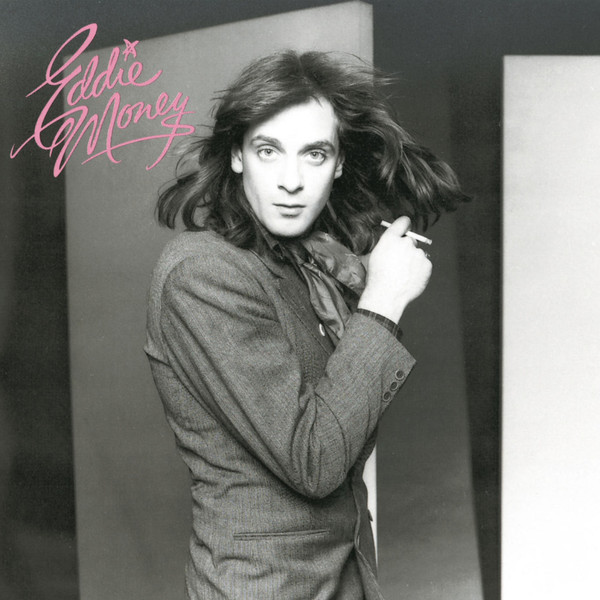
Eddie Money had been playing the Long Branch since about 1972, when he was still called Eddie Mahoney and his band was called The Rockets. By '75, he could headline Saturday night at the Long Branch. Two years later, he would release his debut album, which featured "Two Tickets To Paradise" and "Baby Hold On To Me." Money was dynamic, and all, but a completely derivative performer, just recompiling the music that had come before him.

Who Booked Patti Smith?
Who in Berkeley knew to book Patti Smith? I don't know--but I'll bet I can guess. The hippest, most ultra-cool record store in Berkeley was Rather Ripped Records, on Hearst and Euclid. It was Northside, relatively far from the turmoil of Southside and Telegraph Avenue. Do you recall the kind of record store where everyone was too cool for words, they knew all the Kinks b-sides by heart, and could tell you the difference between the first and second pressing of Pink Floyd albums by reading the scratchings in the vinyl? Rather Ripped was the model for all of those stores.

Part of the Rather Ripped thing was that all the other Berkeley stores--over on Telegraph and Southside--were into hippie stuff, and Rather Ripped was into the British invasion and weird progressive rock. It was a great store, and they would open any record and play it for you if you asked, but their whole thing was that they were wired into the underground mojo.

A number of Berkeley musicians regularly worked at Rather Ripped, including some of the Beserkely Records crowd. Within a few years, Beserkely, a local independent label, would release albums by Earthquake, Greg Kihn, Johnathan Richman and others. So seeing that Patti Smith was opening for Earthquake at the Keystone is a hint of the Beserkeley/Rather Ripped connection. Rather Ripped had at least enough favors to call in that they could get someone to open on a weeknight at the Keystone.

Thanksgiving Week at Keystone Berkeley, 1974
So let's review the week at Keystone Berkeley:

In 1975, Earthquake would release the album Rocking The World on the independent label Beserkeley. The record featured covers of cool, obscure 60s records.

Sunday, November 24: Eli/Earthquake/Patti Smith
Eli was a band from Tallahassee, I think. OK--I saw them once. Earthquake had formed in 1967 in Berkeley High School as The Purple Earthquake, and were still slugging it out. They had released two albums on A&M in the early 70s, but had been dropped by the label. They had kept plugging, and would soon release their own albums on Beserkely. Earthquake played like a British Invasion band, and specialized in obscure covers from the 60s (like the Easybeats "Friday On My Mind"). Patti Smith, then obscure, would go on to the Rock and Roll Hall Of Fame.

In 1977, Eddie Money would release his debut album on Capitol. It had two giant hits, "Two Tickets To Paradise" and "Baby, Hold On To Me."

Monday, November 25: Eddie Money
Eddie Money, as discussed, probably sold more records than anyone on this list, at least while alive. He's a footnote now. Sometimes you hear his music on late-night commercials for baby boomer products. Money is a symbol of 70s/80s "Arena Rock," and all that it implies.

Paul Pena's 1971 debut album for Capitol

Wednesday, November 27: Jerry Garcia and Merl Saunders/Paul Pena

Jerry Garcia used the Keystone Berkeley as his personal clubhouse. He played there over 200 times, more than any other building (including the Fillmores, the Warfield, etc). On this Wednesday before Thanksgiving, Garcia and Merl Saunders would have been jamming on Bob Dylan and Smokey Robinson songs, with Jerry soloing away to his heart's content. Whether you think Garcia's penchant for jamming was a sign of artistic depth or profound self-indulgence doesn't matter here. Jamming out in public in some club on a Wednesday is what you would expect a 60s hippie guitarist to do, and Jerry did it at the Keystone.

Opening act Paul Pena is an interesting case, with a surprising resonance. Pena, who was mostly blind due to a childhood condition, had a blues band in Philadelphia that had opened for the Grateful Dead at the Electric Factory in February 1969. Pena became friendly with Garcia. Pena moved to the Bay Area in 1971. Almost entirely blind by this time, he called the Dead office, who helped him get work. Pena ended up living near Keystone Berkeley, so he played the club regularly.

Pena recorded two albums, for different labels. His self-titled debut album came out on Capitol in 1971. The followup, New Train, was recorded for Bearsville in 1973, but (like many Bearsville albums) was tied up in litigation for decades and not released until 2000. However, Steve Miller had heard a copy of New Train, and made a big hit of Pena's song "Jet Airliner," providing Pena with a solid income.

Friday/Saturday, November 29-30: Earthquake/Eddie Money
Come the weekend after Thanksgiving, just another weekend in Berkeley. Two bands who ruled the Longbranch, moving a dozen blocks nearer to campus. Sawdust, beer and loud guitars. No street poets on the bill tonight. Still, in a week: two future members of the Rock and Roll Hall Of Fame, some songwriters who would write massive 70s hits, and some local bands just trying to make it pay.


Sunday, July 26, 2020

22700 Old Santa Cruz Highway, Chateau Liberte, Los Gatos, CA: 1970-75 (Santa Cruz Mountains Rock History)


The pool at The Chateau Liberte in the Santa Cruz Mountains, with a tiled representation of "The ZigZag Man." Rock History lives on.

The Chateau Liberte was a former resort hotel that was turned into a hip entertainment enclave in the early 70s. Calling the Chateau Liberte "notorious" doesn't tell the half of it. Although the Liberte is in the Santa Cruz Mountains, and on the Old Santa Cruz Highway, it is actually in Santa Clara County. In the early 70s, the Santa Cruz Mountains had plenty of cheap, inaccessible housing, so those hills were full of bikers, pot growers, entrepreneurs and layabouts. Many Mountain residents fit more than one of these categories, and all of them hung out at Chateau Liberte on weekends.

"The Chateau" had originally been a Wells Fargo stagecoach stop. From 1920 to 1945, it was a resort called Chateau Boussy, a French restaurant and resort, noted as a hideaway for important political figures to stash their mistresses. When it got taken over by hippies in the early 70s, it became infamous for its swimming pool, which had a tiled "Zig Zag Man" adorning the swimming pool. The Chateau had a deserved reputation for being a hangout for the Hell's Angels, but many people who went there claim that it was mostly a mellow scene.

The cover of Doobie Brothers debut album (Warner Brothers '71), taken at the Chateau Liberte bar.

In 1970, when The Chateau first got rolling, one of the regular bands was Mountain Current, led by Matthew Kelly and John Tomasi (John Tomasi was the former lead singer of The New Delhi River Band). Mountain Current often shared the stage with either The Doobie Brothers or Hot Tuna, who tended to alternate weekends. Often the nights ended up in a big jam. The cover of the first Doobie Brothers album was taken at the Chateau Liberte bar, and the second Hot Tuna album (First Pull Up, Then Pull Down) was recorded there in 1971, with an inner sleeve photo of Tuna on stage at the Chateau.

W.J. McKay, who first frequented the joint as a teenager, recalled how everyone seemed to get along: "You had people that were totally politically opposite, socially opposite," he told me. "Bikers and hippies were about as different as people could be, and yet they totally co-existed up there. They even had their own underground economy going on. Dope had an established exchange rate. Pot was worth so much in weight, for so many hits of acid. The hippies and the bikers totally worked together. They exchanged food, they worked on each other's vehicles, they did chores for each other."

"It wasn't just a legendary rock & roll bar," McKay said. "It was an example of music and people breaking barriers, for better or worse, in one of the most beautiful natural coastal rain forests in the world. It was a scene that will never be re-created, and hopefully never forgotten."

Mountain Current had a floating membership, depending on who Kelly could get to play each weekend. Future Kingfish guitarist Robbie Hoddinott, then just out of Los Altos High School, played when he could. One other member of Mountain Current that I know was a temporary one, legendary South Bay guitarist Billy Dean Andrus. Andrus was the frontman for the popular San Jose band Weird Herald, fondly remembered by all who saw them (and by those lucky enough to have heard anything from their unreleased album on Onyx). Andrus was some character, however, and at one point around 1970 he was fired from Weird Herald, who temporarily replaced him with old Garcia pal Peter Grant. Andrus played with Mountain Current for about six weeks. Andrus liked to jam, and the suggestion was that he just plugged in and roared with Mountain Current. Andrus particularly enjoyed jamming with Hot Tuna (and no doubt the Doobies) when the shows were winding down.

How legendary was Billy Dean Andrus? He died in November of 1970, apparently after a wild party, and it hit all his friends hard, particularly those who were musicians. Kelly described the scene from that event, and it was so scary that the cops were afraid to come down the road to the club. After a nearly 24-hour blowout, with the musicians (and everyone else) high from too much crank, everybody tried to come down. Andrus took too much dope, and OD'd. Everybody took it hard.

Jorma Kaukonen, one of Andrus'  closest friends, wrote "Ode To Billy Dean," and Hot Tuna not only started playing the song by the end of that month, they still play it to this day.  Doobie Brothers' guitarist Pat Simmons had known Andrus when Simmons was just a teenager, working in folk clubs like The Brass Knocker. Simmons also wrote a song for Billy Dean, called "Black Water" ("Oh black water/Keep on rollin''/Mississippi Moon, won't you keep on shining on me"), and it became a worldwide hit that everyone recognizes. Pat Simmons and the Doobies still play that song, today, too.

In late 1974 and early 1975, Jerry Garcia and Bob Weir each played a few shows at The Chateau. In Garcia's case, I think he was just filling in the date book for an empty weekend, as the venue was tiny even by his standards. Kingfish, on the other hand, seemed to have used the gigs to give Bob Weir a chance to get his sea legs with the band. According to various accounts, the sound man at The Chateau was quite willing to let tapers plug in, so even though the gigs were obscure, tapes from the venue circulated relatively widely.

One other unique piece of Grateful Dead history took place at the Chateau Liberte: a very rare showing of the Sunshine Daydream movie, way back in 1974. I know it was also shown once at Stanford University around that time as well, as I recall not going because "how could it be any good if I hadn't heard of it?" Today, the Chateau Liberte is owned by a real estate agent, and the house is a private residence. It is hard to get to, and can't be seen from the road anyway. But the pool is still intact, apparently, so rock and roll history does live on.


Friday, July 17, 2020

519 W. Zane Street, Louisville, KY: The Kaleidoscope (1968)


The Kaleidoscope, 519 W. Zane Street, Louisville, KY
Kaleidoscope. An optical instrument with two or more reflecting surfaces tilted to each other in an angle. Basically a child's toy. Nonetheless, it became a sixties "word," like "Mandala" or "Stonehenge," turning up everywhere. In my archaeological diggings in the substratum of 60s psychedelic rock, Kaleidoscope always turns up
Sometimes, your archaeological digs find a synergy, unexpected but all the better for that. Here are the potsherds of the story of The Kaleidoscope in Louisville, KY, a psychedelic outpost on the circuit for 8 or 9 months in 1967.

Anyone who recalls anything--flashback, bad dream, recovered memory, grand jury testimony--please represent in the Comments.

Louisville, KY
Louisville, Kentucky was pretty far outside of the rock and roll touring mainstream in the 1960s. Louisville was near the rapids at the Falls of Ohio, on the Ohio River. Thus Louisville became a transit point, as boats had to be unloaded and their cargo transferred downriver. Prior to the Civil War, Louisville was also a focal point for escaping slaves, since neighboring Indiana was a Free State. In the 1960s, like many cities, Louisville experienced a move to the suburbs, leaving downtown buildings and businesses stranded. Although I do not know for sure, it is likely that is how the hotel where the Changes club was opened became available.

519 Zane St near the Ohio River and I-64, just north of the U. of Louisville. The University of Louisville was founded 1798,  city funded until 1970, when it became a state institution. The school was always a college basketball power, not surprising considering it was in between the University of Kentucky (in Lexington) and the University of Indiana. Peck Hickman was head basketball coach from 1944-67, and had 46 straight winning seasons (and his assistant John Dromo ran the team through 1971). Louisville hired Denny Crum in 1971, and he in turn ran the team until 2001, bringing the University of Louisville to the national sports stage. Crum won his first NCAA title in 1980, when Darrell Griffiths--" Dr. Dunkenstein"--led the team over Larry Brown's UCLA squad, anchored by Kiki Vanderweghe.


A photo accompanies a Louisville Courier Journal article from June 26, 1967. Innocent times. (the full article is reproduced below)

Some years ago, I did some crucial archeology on The Kaleidoscope in Hollywood. There were great posters, all sorts of Los Angeles law enforcement issues, great bands, a Saturday Night Live connection and so much more. As part of the analysis, I felt I needed (for Google purposes) to note that there had been venues named The Kaleidoscope in Philadelphia and Louisville. This was about a decade ago, and I think if you googled "Kaleidoscope + Louisville," all you got was my blog. Unexpectedly, I got some amazing comments about the Louisville venue.
Just a few things from memory regarding Kaleidoscope in Louisville, Kentucky.

It was originally called Changes and was located in a very old 3 story opera house. The first floor was an excellent gift/head shop. The exterior was painted brightly with flowers, peace signs, etc. Changes was owned by a dude from California, but I can't recall his name. He built a fantastic house in beautiful Floyd Knobs just across the river in Indiana. I smoke my first there.

Later, the club was owned by an interesting family trio of wonderful ladies; 3 generations of women running the coolest live music club in the Midwest. I can remember the names Goggie and Debbie, but the third escapes me. Both had a magnificent decor and wondrous light-show by Aurora Borealis (I think)

You are correct that Iron Butterfly played there, but the most memorable show was Frank Zappa and the Mothers. Local favorites were The Tiffany System and 31st of February who eventually became the Hour Glass, Allman Joy, and of course the Allman Brothers.

The place was under constant siege by the Louisville Police Department who at one time stole the club's dance license off the wall and tried to arrest anyone who danced. This was foiled by a signal light triggered from downstairs. When the light came on, everyone stopped dancing and sat down.

The historical building was destroyed by a mysterious fire that most thought was set by the police.
Randy Guest I believe was the original owner of the Kaleidoscope in Louisville. His wife's name was Keiko. Even though I was under age at the time, I was possibly Louisville's youngest hippie-freak and I spent a few enjoyable evenings there as well as having a private party celebrating my 9th birthday there, if I recall correctly. One of the popular local bands at that time who played there regularly was The Waters.


An old photo of the three-story opera house at 619 W. Zane Street, in Louisville, some decades before it became Changes (in 1967) and then the Kalieodoscope

As the internet has improved its scope and reach, we can find out a little bit about The Kaleidoscope and the Louisville rock scene. It's just fragments, but it paints the outline of what was happening. What we don't know from this vantage point is how often the Kaleidoscope was open. Most psychedelic clubs in this era were just open on weekends, rather than six or seven nights a week. There wasn't a bar, to my knowledge, and rock fans were young in those days, so the club wouldn't likely have made money on a weeknight. My guess is that local or regional bands played most weekends, and every once in a while they got a good out of town band.

The 1968 Vanguard debut album by the 31st Of February, with Scott Boyer, David Brown and Butch Trucks. Apparently the Jacksonville band played Louisville's Kaleidoscope
The 31st Of February were a Jacksonville, FL trio with guitarist Scott Boyer (later in Cowboy), drummer Butch Trucks (later in the Allman Brothers for 45 years) and bassist David Brown. Their debut album was released on Vanguard in 1968 (later in 1968, they were joined temporarily by Duane and Gregg Allman)

A long lost flyer for The Mothers of Invention show at The Kaleidoscope, on March 17, 1968 (thanks Lonnie for tweeting out the scan)
March 17, 1968 The Kaleidoscope, Louisville, KY: Mothers of Invention/The Oxfords (two shows)
This show was confirmed by Zappa scholar Charles Ulrich, the gold standard, so we can be sure of it even if we know little else. The lineup was the full MOI HOF: Ray Collins, Ian Underwood, the Gardners, Motorhead, Don Preston, Roy Estrada, Artie Tripp and Jimmy Carl Black (the Indian of the group).

June 13, 1968 The Kaleidoscope, Louisville, KY: Blue Cheer (two shows 8:00 and 10:30)
San Francisco's Blue Cheer was riding high behind their debut album Vincebus Eruptum, and the sorta-hit "Summertime Blues." Were they good? Opinions vary. Were they loud? Stacks of Marshall Stacks, cranked to 11--they were loud, in era when backlines were small and PAs often non-existent. Blue Cheer had enough infamy at least (and apparently some AM radio play, per the ad above) for the promoters to have two shows.

July 30, 1968 The Kaleidoscope, Louisville, KY: Iron Butterfly
Iron Butterfly were a cool underground band, at this point. Atco had just released their second album, Inna-Gadda-Da-Vida, the week before. That album that sold so much that Atco Records invented the Platinum record to honor it. At the time, though, the Butterfly were just a quartet from LA, with Erik Brann on guitar, not that well known after just one prior album. In 1969, behind their hit, Iron Butterfly would return to Louisville to headline the U. of Louisville basketball arena, Freedom Hall.

October 31, 1968 Freedom Hall, U. of Louisville, Louisville, KY: The Doors/Waters/Tom Dooley/The Lovelight
On Halloween 1968, however, The Doors were already big enough to headline Freedom Hall. It appears that the Kaleidoscope team did the lights, and Waters, who were one of the opening acts, were Kaleidoscope regulars. 


December 7, 1968 Knights Hall, Bellarmine College, Louisville, KY: Grateful Dead/The Oxfords/Waters/Stonehenge
The Grateful Dead always have a part to play in these psychedelic narratives, In this case, apparently the Dead were supposed to play The Kaleidoscope but instead played at nearby Bellarmine College. The Kaleidoscope crew put on the concert, however, and some of their regular bands seemed to be opening. The Grateful Dead were always willing to take a chance with new hippie venues in towns they had never visited, one of the reasons that so many 60s venues have some sort of legendary Dead show attached to their mythology.

It's not clear to me whether the Dead would have too big for the Kaleidoscope, or the building had already burned down. In any case, the December show seems to be the end of The Kaleidoscope story in Louisville.

Sic Transit Gloria Psychedelia.


Archaeological Appendix: Louisville Courier-Journal Article, June 26, 1967
I tend to focus pretty exclusively on 60s psychedelia, and I'm mainly interested in the bands and the economics and contemporary neighborhood politics around different venues. Still, this article from the previous year's Louisville Courier-Journal  (June 26, 1967)seems a goldmine for those interested in proto-hippie pop culture outside of the two coasts. The article is about two "Teen" clubs, Changes and the nearby 7-To-1 club. The reporter talks about the teenagers clothes, and what high school they go to, and has quotes from 17 year olds trying to sound sophisticated. You'll have to embiggen the clipping above, but if this sounds interesting it's a fascinating snapshot into 1967 Louisville teen life.

Update: 519 W. Zane Street--The Whole Story

Set the Wayback Machine, and listen to a 2-hour (!) audio special on 519 W. Zane Street, complete with a 60s rock and roll soundtrack. It turns out that the building dates to 1888, founded as the Louisville Athletic Club. Afterwards, it had many incarnations: a school, a Dairy, an Oil Company, and finally around 1958, local abstract artist Leo Zimmerman had formed the Society For The Arts in Louisville opened 519 W. Zane as the Louisville Art Club. It was a private club, which I think allowed it to serve liquor. Jazz acts and many other performers played the club.

There's a lot of great information--Iron Butterfly got paid $700, and Steppenwolf apparently played the Kaleidoscope (for $2000). Great work by the Louisville scholars. It's well worth the time of listening, so I won't spoil it all.


Monday, July 13, 2020

1814 Franklin Street, Oakland, CA--Regency Ballroom, Oakland, CA

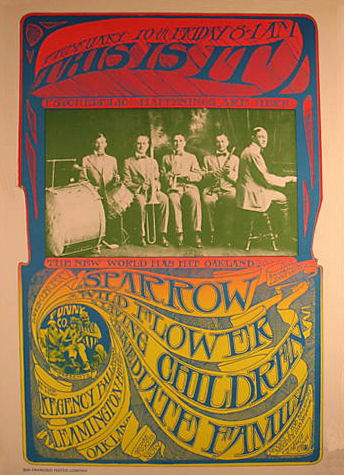
The Leamington Hotel in Oakland was a downtown hotel that had fallen into disuse by the 1960s as fewer and fewer visitors actually stayed in hotels downtown. It was used briefly as a rock venue, initially for "teen" dances around 1966, and also for one psychedelic show with a widely circulated poster. On February 10, 1967, The Funny Company presented The Sparrow, The Widlflower, The Living Children and The Immediate Family at The Regency Ballroom. The Sparrow, then based in Sausalito, later evolved into Steppenwolf; The Wildflower were an Oakland-based band who were Fillmore and Avalon regulars; The Living Children were the finest psychedelic band in Fort Bragg, CA; and The Immediate Family, with guitarist Tim Barnes, were a popular Contra Costa County band. This intriguing foray into psychedelia was rare for Oakland, and never repeated at my knowledge at The Regency Ballroom. The venue was small, parking was probably difficult, public transport non-existent and the police almost certainly intolerant. Although the bands seem excellent today, and were probably a lot of fun in concert, they all would have been fairly unknown at the time. Although the site has obviously changed, the ballroom was plainly quite small by late 1960s standards, and even if the venue was full it would not have generated the kind of revenue needed to sustain a rock ballroom like The Fillmore or Avalon. I visited the site of The Leamington Hotel, at 1814 Franklin Street on August 7, 2009, and took photos of the interior (above) and exterior of the building. I assume the pretty colored glass in the center of the building is a remnant of the Regency Ballroom--it must have looked nice when it was part of a light show. The Leamington Hotel, now called "The Leamington", is basically an office building with a few shops and restaurants. In the 1980s, there was a good pizza place in the building (Da Vinci's), which is how I am aware of it.